About
The Cornell Phonetics Lab is a group of students and faculty who are curious about speech. We study patterns in speech — in both movement and sound. We do a variety research — experiments, fieldwork, and corpus studies. We test theories and build models of the mechanisms that create patterns. Learn more about our Research. See below for information on our events and our facilities.
Upcoming Events

10th March 2026 04:30 PM
ASL Lecture Series: Philip Bravin
The ASL Program at the Department of Linguistics proudly presents Dr. Philip Bravin, Trustee Emeritus at Gallaudet University. Dr. Brain will present on "How the World Changed for the Deaf Community in 7 Days".
Controlling Our Destiny: A Board Member's View of Deaf President Now by Philip W. Bravin is a firsthand account of the 1988 Deaf President Now (DPN) movement at Gallaudet University, offering an insider's perspective on the crucial, behind-the-scenes decisions of the Board of Trustees as deaf students demanded a deaf president, highlighting the fight for self-determination and its lasting impact on deaf culture and leadership.
A 1966 graduate of Gallaudet and an IBM executive, Bravin became the intermediary between student leaders and the Board during the protest. When Spilman announced her resignation on March 13, 1988, Bravin became the first deaf chairperson of the Gallaudet University Board of Trustees, serving as chair from 1988 to 1993.
He has held various positions within the deaf community and in the corporate business community over the years. He was formerly the president and chief executive officer of the National Captioning Institute (NCI)—at that time the largest provider of closed captioning services in the world.
Prior to joining NCI, he worked for IBM for nearly 25 years in a variety of technical, marketing, and management positions.
ASL/English interpretation will be provided.
Location: Room 106, Morrill Hall
11th March 2026 12:20 PM
PhonDAWG (Phonetics Data Analysis Working Group)
Faolan will present preliminary data from her Q-paper.
Location: B11 Morrill Hall, 159 Central Avenue, Morrill Hall, Ithaca, NY 14853-4701, USA/index.jpg)
16th March 2026 12:20 PM
Phonetics Lab Meeting
Topic TBD.
Location: B11 Morrill Hall, 159 Central Avenue, Morrill Hall, Ithaca, NY 14853-4701, USA
18th March 2026 12:20 PM
Phonetics Lab Meeting
Topic TBD.
Location: B11 Morrill Hall, 159 Central Avenue, Morrill Hall, Ithaca, NY 14853-4701, USA
Facilities
The Cornell Phonetics Laboratory (CPL) provides an integrated environment for the experimental study of speech and language, including its production, perception, and acquisition.
Located in Morrill Hall, the laboratory consists of six adjacent rooms and covers about 1,600 square feet. Its facilities include a variety of hardware and software for analyzing and editing speech, for running experiments, for synthesizing speech, and for developing and testing phonetic, phonological, and psycholinguistic models.
Web-Based Phonetics and Phonology Experiments with LabVanced
The Phonetics Lab licenses the LabVanced software for designing and conducting web-based experiments.
Labvanced has particular value for phonetics and phonology experiments because of its:
- *Flexible audio/video recording capabilities and online eye-tracking.
- *Presentation of any kind of stimuli, including audio and video
- *Highly accurate response time measurement
- *Researchers can interactively build experiments with LabVanced's graphical task builder, without having to write any code.
Students and Faculty are currently using LabVanced to design web experiments involving eye-tracking, audio recording, and perception studies.
Subjects are recruited via several online systems:
- * Prolific and Amazon Mechanical Turk - subjects for web-based experiments.
- * Sona Systems - Cornell subjects for for LabVanced experiments conducted in the Phonetics Lab's Sound Booth

Computing Resources
The Phonetics Lab maintains two Linux servers that are located in the Rhodes Hall server farm:
- Lingual - This Ubuntu Linux web server hosts the Phonetics Lab Drupal websites, along with a number of event and faculty/grad student HTML/CSS websites.
- Uvular - This Ubuntu Linux dual-processor, 24-core, two GPU server is the computational workhorse for the Phonetics lab, and is primarily used for deep-learning projects.
In addition to the Phonetics Lab servers, students can request access to additional computing resources of the Computational Linguistics lab:
- *Badjak - a Linux GPU-based compute server with eight NVIDIA GeForce RTX 2080Ti GPUs
- *Compute server #2 - a Linux GPU-based compute server with eight NVIDIA A5000 GPUs
- *Oelek - a Linux NFS storage server that supports Badjak.
These servers, in turn, are nodes in the G2 Computing Cluster, which currently consists of 195 servers (82 CPU-only servers and 113 GPU servers) consisting of ~7400 CPU cores and 698 GPUs.
The G2 Cluster uses the SLURM Workload Manager for submitting batch jobs that can run on any available server or GPU on any cluster node.
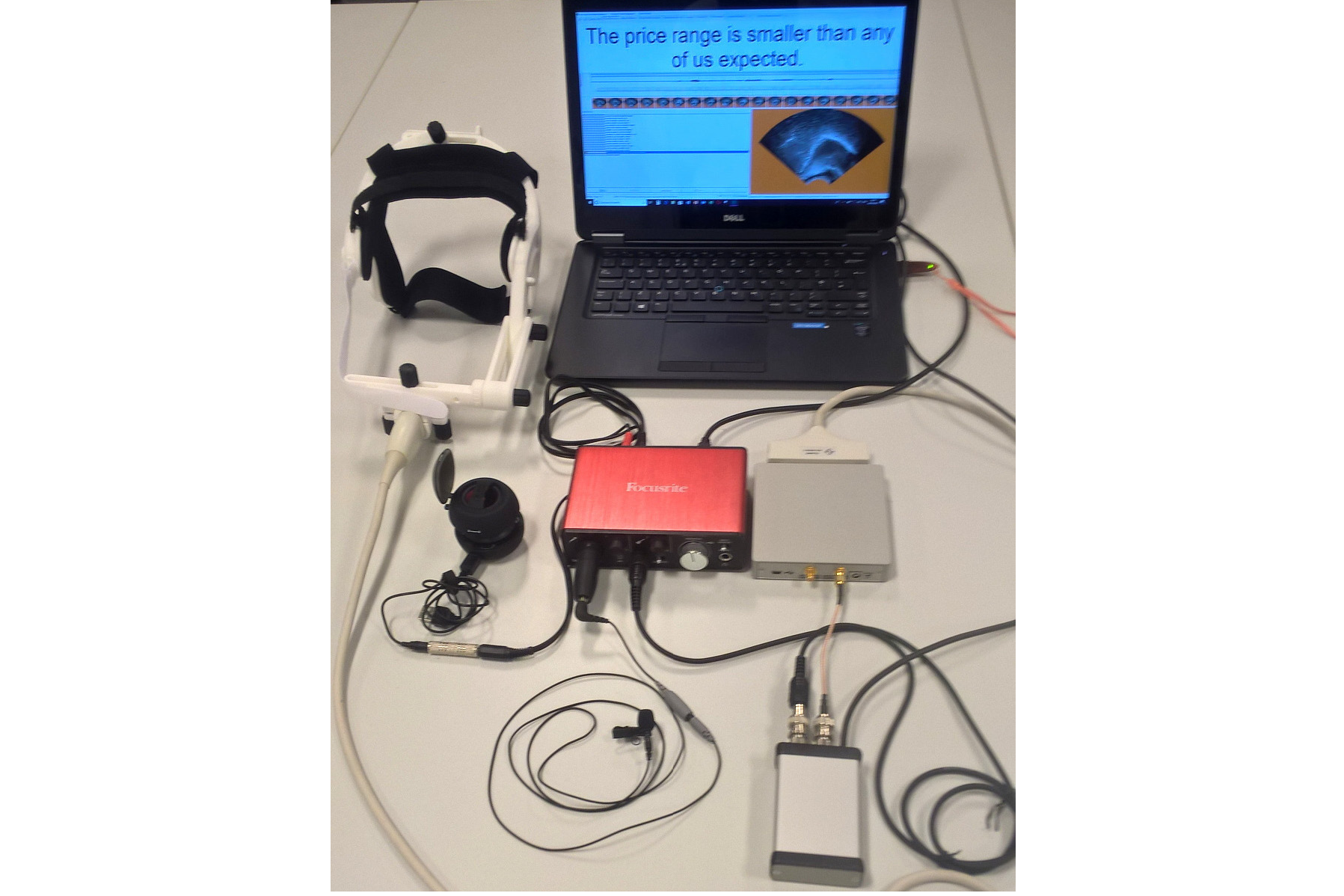
Articulate Instruments - Micro Speech Research Ultrasound System
We use this Articulate Instruments Micro Speech Research Ultrasound System to investigate how fine-grained variation in speech articulation connects to phonological structure.
The ultrasound system is portable and non-invasive, making it ideal for collecting articulatory data in the field.
BIOPAC MP-160 System
The Sound Booth Laboratory has a BIOPAC MP-160 system for physiological data collection. This system supports two BIOPAC Respiratory Effort Transducers and their associated interface modules.
/index.png)
Language Corpora
- The Cornell Linguistics Department has more than 915 language corpora from the Linguistic Data Consortium (LDC), consisting of high-quality text, audio, and video corpora in more than 60 languages. In addition, we receive three to four new language corpora per month under an LDC license maintained by the Cornell Library.
- This Linguistic Department web page lists all our holdings, as well as our licensed non-LDC corpora.
- These and other corpora are available to Cornell students, staff, faculty, post-docs, and visiting scholars for research in the broad area of "natural language processing", which of course includes all ongoing Phonetics Lab research activities.
- This Confluence wiki page - only available to Cornell faculty & students - outlines the corpora access procedures for faculty supervised research.
Speech Aerodynamics
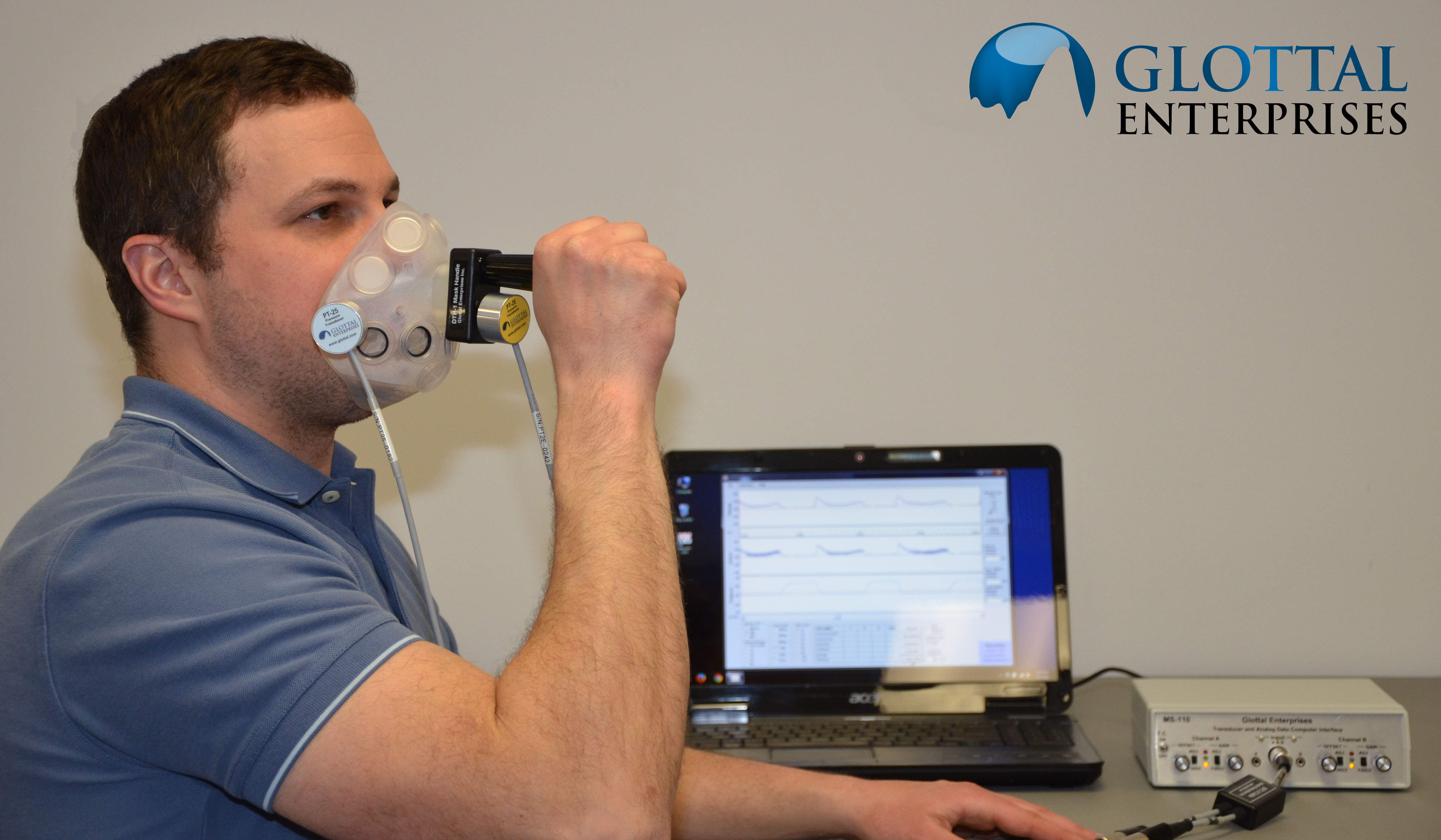
Studies of the aerodynamics of speech production are conducted with our Glottal Enterprises oral and nasal airflow and pressure transducers.
Electroglottography
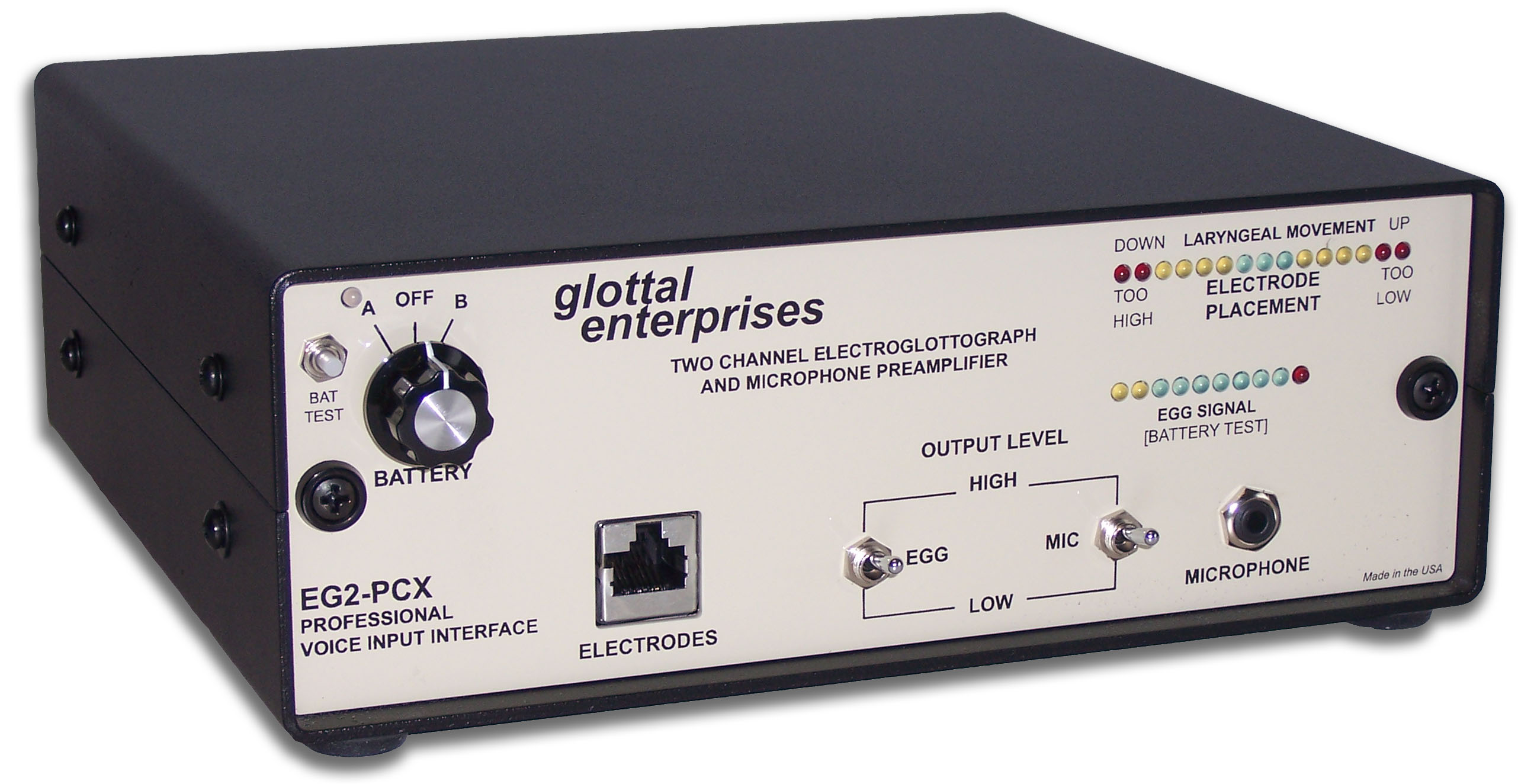
We use a Glottal Enterprises EG-2 electroglottograph for noninvasive measurement of vocal fold vibration.
Real-time vocal tract MRI
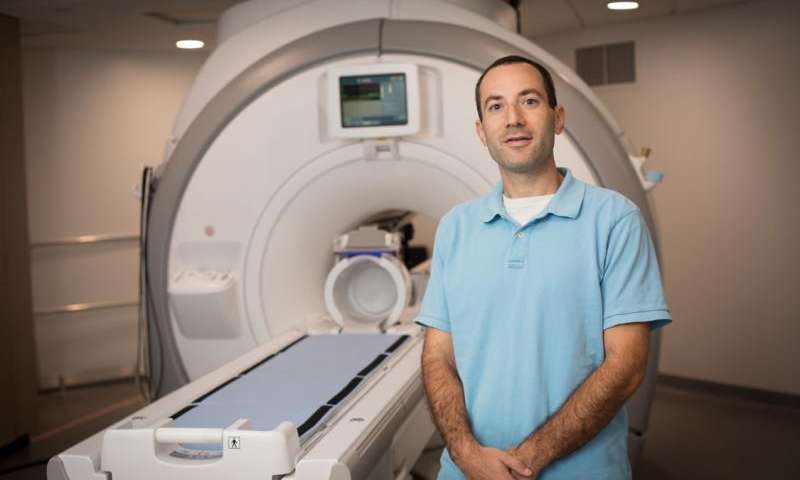
Our lab is part of the Cornell Speech Imaging Group (SIG), a cross-disciplinary team of researchers using real-time magnetic resonance imaging to study the dynamics of speech articulation.
Articulatory movement tracking
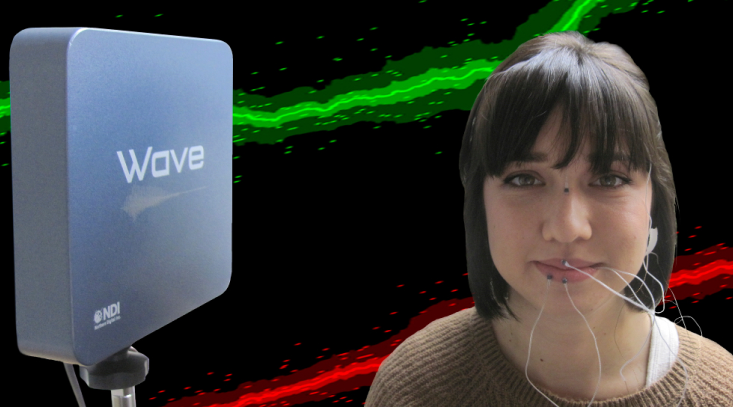
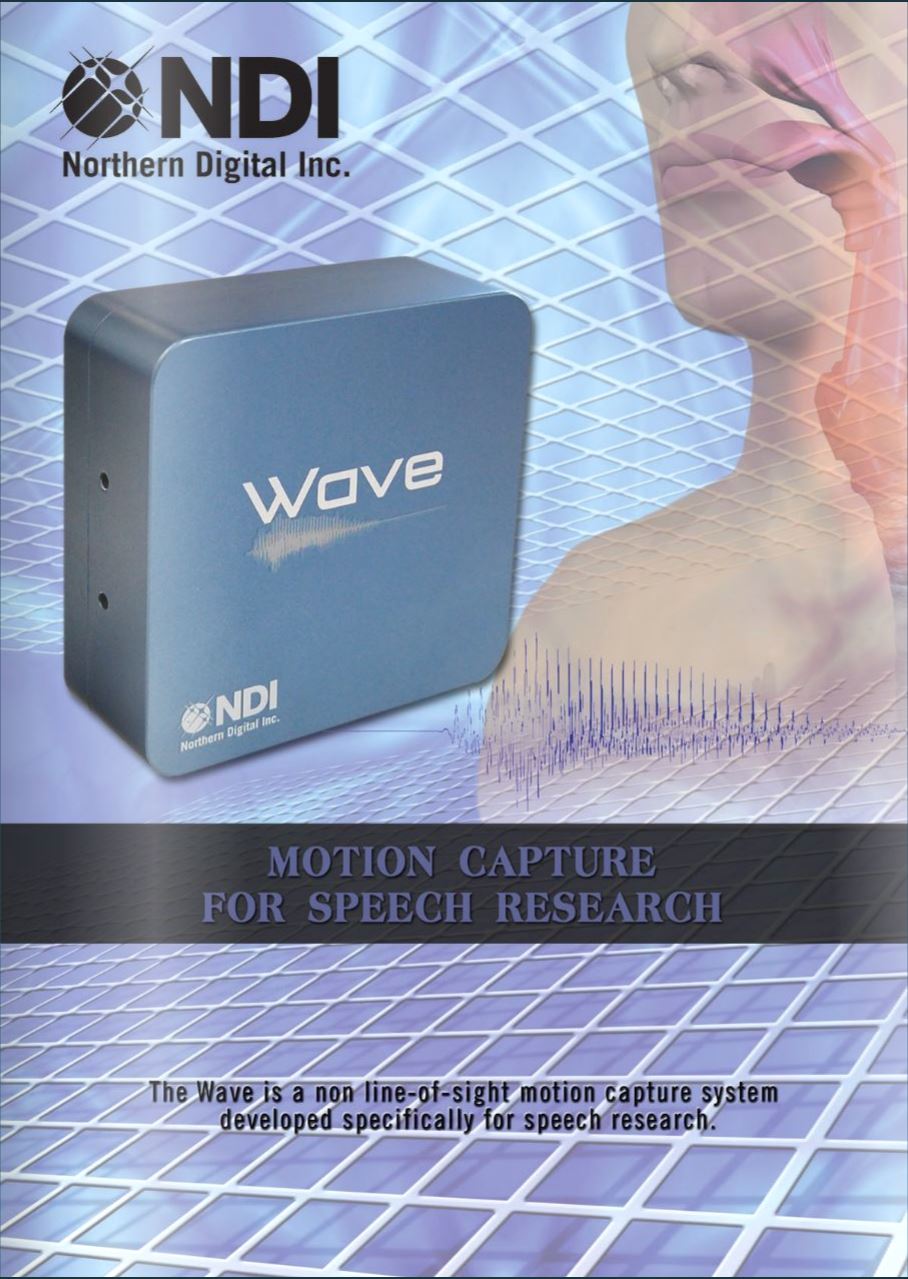
We use the Northern Digital Inc. Wave motion-capture system to study speech articulatory patterns and motor control.
Sound Booth
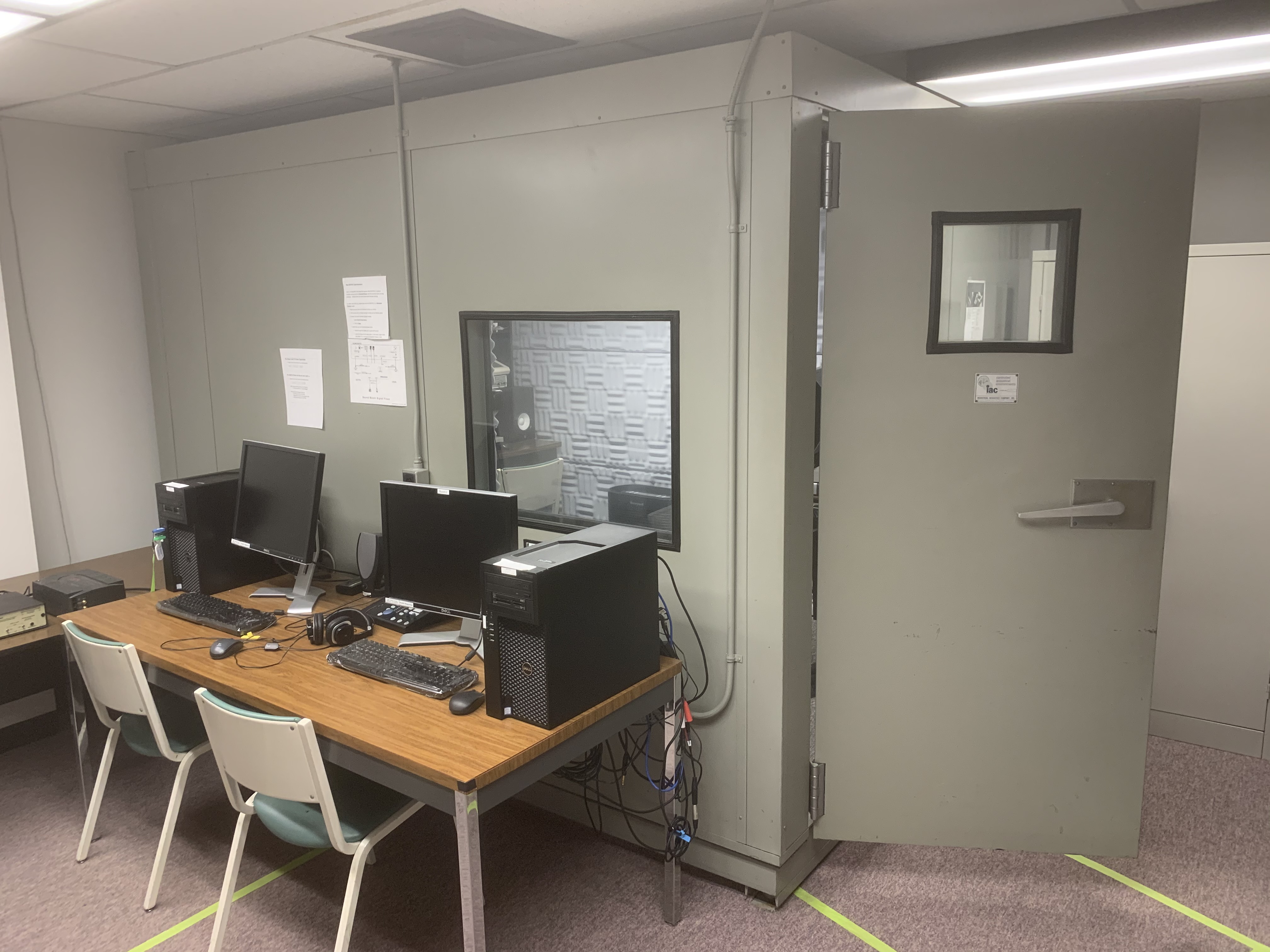
Our isolated sound recording booth serves a range of purposes--from basic recording to perceptual, psycholinguistic, and ultrasonic experimentation.
We also have the necessary software and audio interfaces to perform low latency real-time auditory feedback experiments via MATLAB and Audapter.

©Copyright 2020, Cornell University