About
The Cornell Phonetics Lab is a group of students and faculty who are curious about speech. We study patterns in speech — in both movement and sound. We do a variety research — experiments, fieldwork, and corpus studies. We test theories and build models of the mechanisms that create patterns. Learn more about our Research. See below for information on our events and our facilities.
Upcoming Events
7th November 2026 09:00 AM
CNY Humanities Corridor Workshop: Languages of this place: Challenges and Opportunities
The Cornell Linguistics Department is co-hosting a CNY Humanities Corridor workshop titled: Languages of this place: Challenges and Opportunities, which will be held November 7 at the Africana Studies and Research Center, Cornell University 310 Triphammer Rd., Ithaca NY, 14850
The workshop builds on a series of events (Language, Memory, Future, November 5-6) celebrating the richness of languages of America focusing primarily on the histories and futures of two longstanding communities in Upstate New York: the Deaf community and the Haudenosaunee Confederacy, especially the Gayogo̱hó꞉nǫʼ.
The workshop engages these communities and other language communities in our region, addressing issues of language rights, language survival, connections between language and culture, and implicit pressure of language technology toward homogenization, away from local knowledge.
The workshop is organized around presentations, panel discussions, and general discussion, including onsite meals and coffee breaks to foster extensive informal interaction over the course of the day.
Language, Memory, Future is framed as a celebration, but all of these issues are complex in light of issues of minoritized language rights, pressures causing language shift and risk of language loss.
Featured Guests Include:
- -Tawny Holmes-Hlibok, Associate Professor at Gallaudet University & Director of the National Beacon Center for Early Language System Accountability and Data
- -Corinna Hill, RIT, Rochester NY
- -Sara General & Amber Skye, Six Nations Polytechnic, Brantford, ON, Canada
- -Ranjit Singh, Data & Society Research Institute, NY, NY
- -Daniel Kaufman, CUNY Graduate Center & Queens College, Endangered Languages Alliance
- -Aditya Vashistha, Cornell Ann S. Bowers College of Computing and Information Science
More information or questions: Please email lingdept@cornell.edu. Parking is available on site.
*This workshop is funded and made possible by the CNY Humanities Corridor. The organizers also thank the Cornell Department of Linguistics for hosting the event; the Cornell Society for Humanities for their support, and the Africana Studies and Research Center for making their space available.
----------------------------------------------------------------------------------------------------------------------
Schedule and Speakers
-----------------------------------------------------------------------------------------------------------------------
9:15-9:45 Continental breakfast – on site
9:45-10:00 Opening remarks – Abby Cohn, Cornell
10-12:20 ASL – session chair Brenda Schertz, Cornell
- Tawny Holmes, Gallaudet - 250 Years of Deaf Children: Language, Legacy, and the Future We Choose
- Corinna Hill,, RIT/NTID Centers of Belonging: Why Regional Deaf Spaces Matter
- Discussion and Q&A – facilitated by Brenda Schertz, Cornell
12:20-2:00 Lunch – on site
2:00- 3:15 Gayogo̱hó꞉nǫʼ/Haudenosaunee – session chair John Whitman, Cornell
- -Sara General , Six Nations Polytechnic
- -Amber Skye, Six Nations Polytechnic
- -Daniel Kaufman, Linguistics, Queens College & Endangered Languages Alliance
- -Discussion and Q&A – facilitated by John Whitman, Cornell
3:15-3:30 Coffee break
3:30-4:30 Impact of AI on language and culture, session chair Marten van Schijndel, Cornell
- -Ranjit Singh, Data & Social Research Institute
- -Aditya Vashistha, Information Sciences, Cornell
4:30-5:15 - Final panel & discussion by presenters, facilitated by Marten van Schijndel, Cornell
5:30-7:00pm Dinner – on site
Location: Africana Studies and Research Center, Cornell University 310 Triphammer Rd., Ithaca NY, 14850
9th November 2026 12:20 PM
Phonetics Lab Meeting
We will discuss Research Framing - specifically:
- -What do we mean by "research question"?
- -What is a "hypothesis" vs. a "prediction"?
- -What is "theoretical" vs. "descriptive"?
- -Where does "methodology" fit in to the picture?
We will ask lab members to apply these questions to their current research.
Location: B11 Morrill Hall, 159 Central Avenue, Morrill Hall, Ithaca, NY 14853-4701, USA
11th November 2026 12:20 PM
Phonetics Lab Meeting - CV Workshop.
Abby and Sam will lead a review of lab member draft CVs.
Location: B11 Morrill Hall, 159 Central Avenue, Morrill Hall, Ithaca, NY 14853-4701, USA
12th November 2026 11:45 AM
Cognitive Science Colloquium: Using advances in AI to address classic debates in cognitive science
Dr. Brenden M. Lake, Associate Professor of Computer Science and Psychology of Princeton University, will give a Cognitive Science Colloquium talk titled: Using advances in AI to address classic debates in cognitive science
Abstract:
AI and cognitive science are two fields that grew up together and share a goal of understanding intelligence in computational terms.
Given the rapid progress in AI, now is an exciting time to revisit foundational questions in cognitive science and see if we can make new progress. I will describe our work using modern neural network architectures and training techniques to advance three longstanding debates:
- (1) What ingredients do children need to learn words?
- (2) Can neural networks capture human-like systematic generalization?
- (3) Is the mind better characterized as Bayesian or connectionist, symbolic or sub-symbolic?
Bio:Brenden M. Lake is an Associate Professor of Computer Science and Psychology at Princeton University. He received his B.S. and M.S. in Symbolic Systems from Stanford University in 2009 and his Ph.D. in Cognitive Science from MIT in 2014. He was a postdoctoral Data Science Fellow at NYU from 2014–2017 and a faculty member there from 2017–2025.
Brenden is a recipient of the Robert J. Glushko Prize for Outstanding Doctoral Dissertation in Cognitive Science, an MIT Technology Review Innovator Under 35, and the author of research selected by Scientific American as one of the 10 most important advances of 2016.
His research seeks the ingredients of intelligence: his lab uses advances in machine intelligence to better understand human intelligence, and insights from human cognition to develop more fruitful and capable forms of machine intelligence.
Location: G01, Gates Hall, Cornell University
Facilities
The Cornell Phonetics Laboratory (CPL) provides an integrated environment for the experimental study of speech and language, including its production, perception, and acquisition.
Located in Morrill Hall, the laboratory consists of six adjacent rooms and covers about 1,600 square feet. Its facilities include a variety of hardware and software for analyzing and editing speech, for running experiments, for synthesizing speech, and for developing and testing phonetic, phonological, and psycholinguistic models.
Web-Based Phonetics and Phonology Experiments with LabVanced
The Phonetics Lab licenses the LabVanced software for designing and conducting web-based experiments.
Labvanced has particular value for phonetics and phonology experiments because of its:
- *Flexible audio/video recording capabilities and online eye-tracking.
- *Presentation of any kind of stimuli, including audio and video
- *Highly accurate response time measurement
- *Researchers can interactively build experiments with LabVanced's graphical task builder, without having to write any code.
Students and Faculty are currently using LabVanced to design web experiments involving eye-tracking, audio recording, and perception studies.
Subjects are recruited via several online systems:
- * Prolific and Amazon Mechanical Turk - subjects for web-based experiments.
- * Sona Systems - Cornell subjects for for LabVanced experiments conducted in the Phonetics Lab's Sound Booth

Computing Resources
The Phonetics Lab maintains two Linux servers that are located in the Rhodes Hall server farm:
- Lingual - This Ubuntu Linux web server hosts the Phonetics Lab Drupal websites, along with a number of event and faculty/grad student HTML/CSS websites.
- Uvular - This Ubuntu Linux dual-processor, 24-core, two GPU server is the computational workhorse for the Phonetics lab, and is primarily used for deep-learning projects.
In addition to the Phonetics Lab servers, students can request access to additional computing resources of the Computational Linguistics lab:
- *Badjak - a Linux GPU-based compute server with eight NVIDIA GeForce RTX 2080Ti GPUs
- *Compute server #2 - a Linux GPU-based compute server with eight NVIDIA A5000 GPUs
- *Oelek - a Linux NFS storage server that supports Badjak.
These servers, in turn, are nodes in the G2 Computing Cluster, which currently consists of 195 servers (82 CPU-only servers and 113 GPU servers) consisting of ~7400 CPU cores and 698 GPUs.
The G2 Cluster uses the SLURM Workload Manager for submitting batch jobs that can run on any available server or GPU on any cluster node.
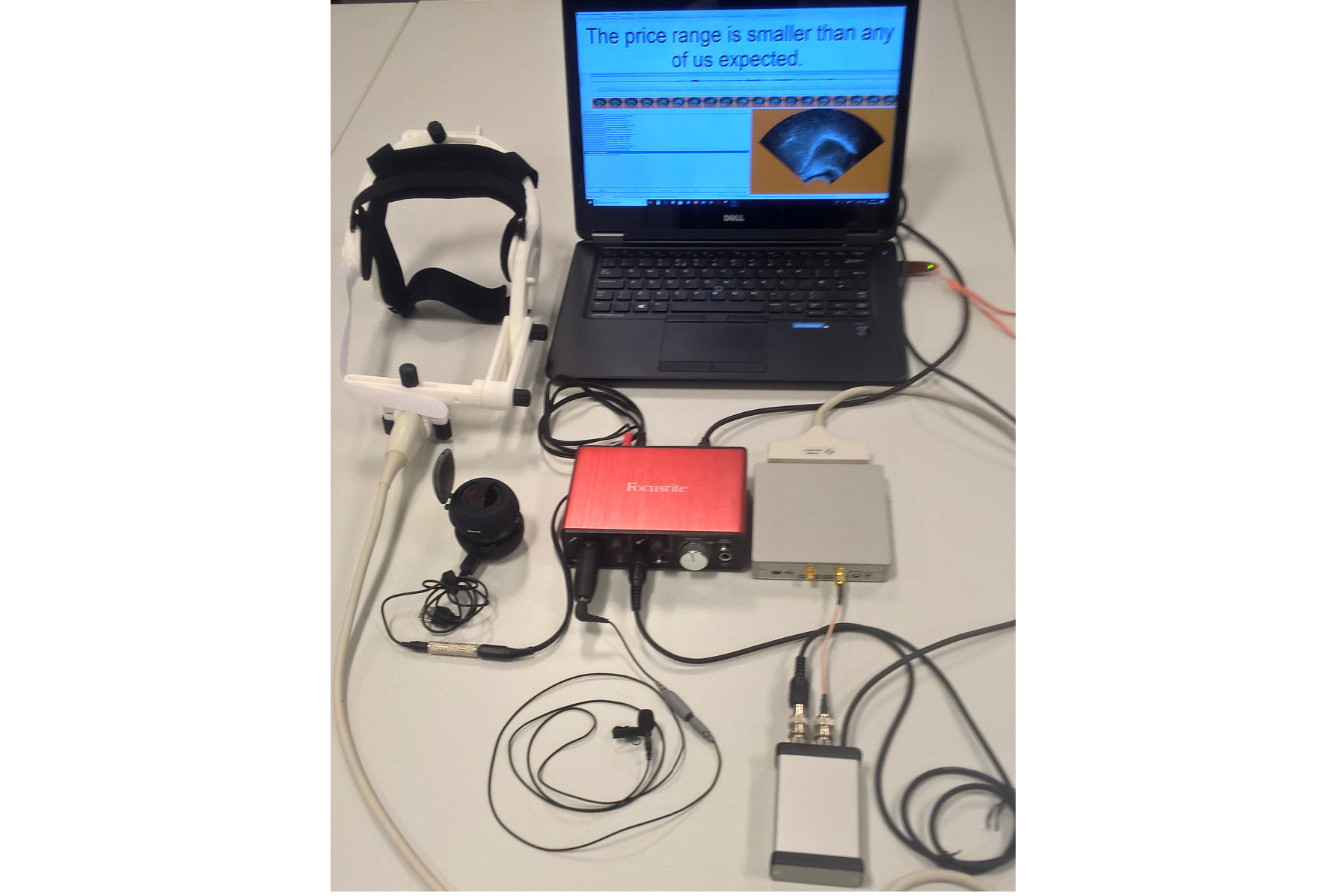
Articulate Instruments - Micro Speech Research Ultrasound System
We use this Articulate Instruments Micro Speech Research Ultrasound System to investigate how fine-grained variation in speech articulation connects to phonological structure.
The ultrasound system is portable and non-invasive, making it ideal for collecting articulatory data in the field.
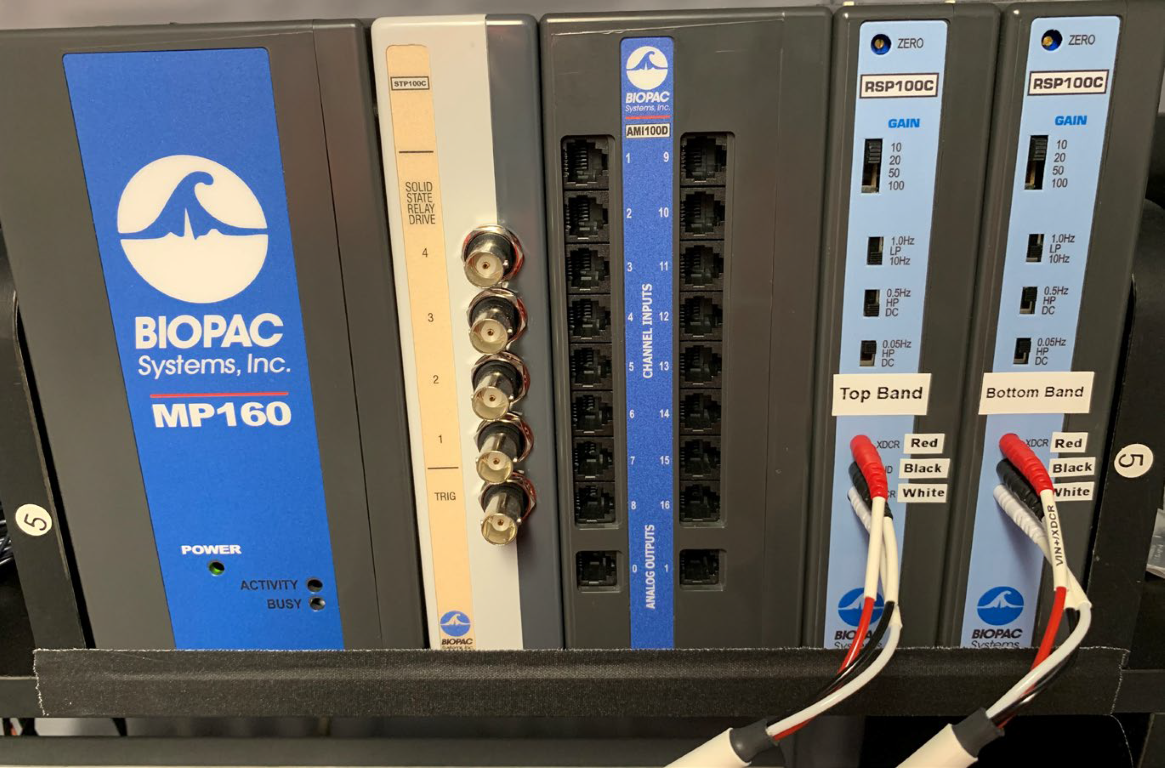
BIOPAC MP-160 System
The Sound Booth Laboratory has a BIOPAC MP-160 system for physiological data collection. This system supports two BIOPAC Respiratory Effort Transducers and their associated interface modules.
Language Corpora
- The Cornell Linguistics Department has more than 915 language corpora from the Linguistic Data Consortium (LDC), consisting of high-quality text, audio, and video corpora in more than 60 languages. In addition, we receive three to four new language corpora per month under an LDC license maintained by the Cornell Library.
- This Linguistic Department web page lists all our holdings, as well as our licensed non-LDC corpora.
- These and other corpora are available to Cornell students, staff, faculty, post-docs, and visiting scholars for research in the broad area of "natural language processing", which of course includes all ongoing Phonetics Lab research activities.
- This Confluence wiki page - only available to Cornell faculty & students - outlines the corpora access procedures for faculty supervised research.
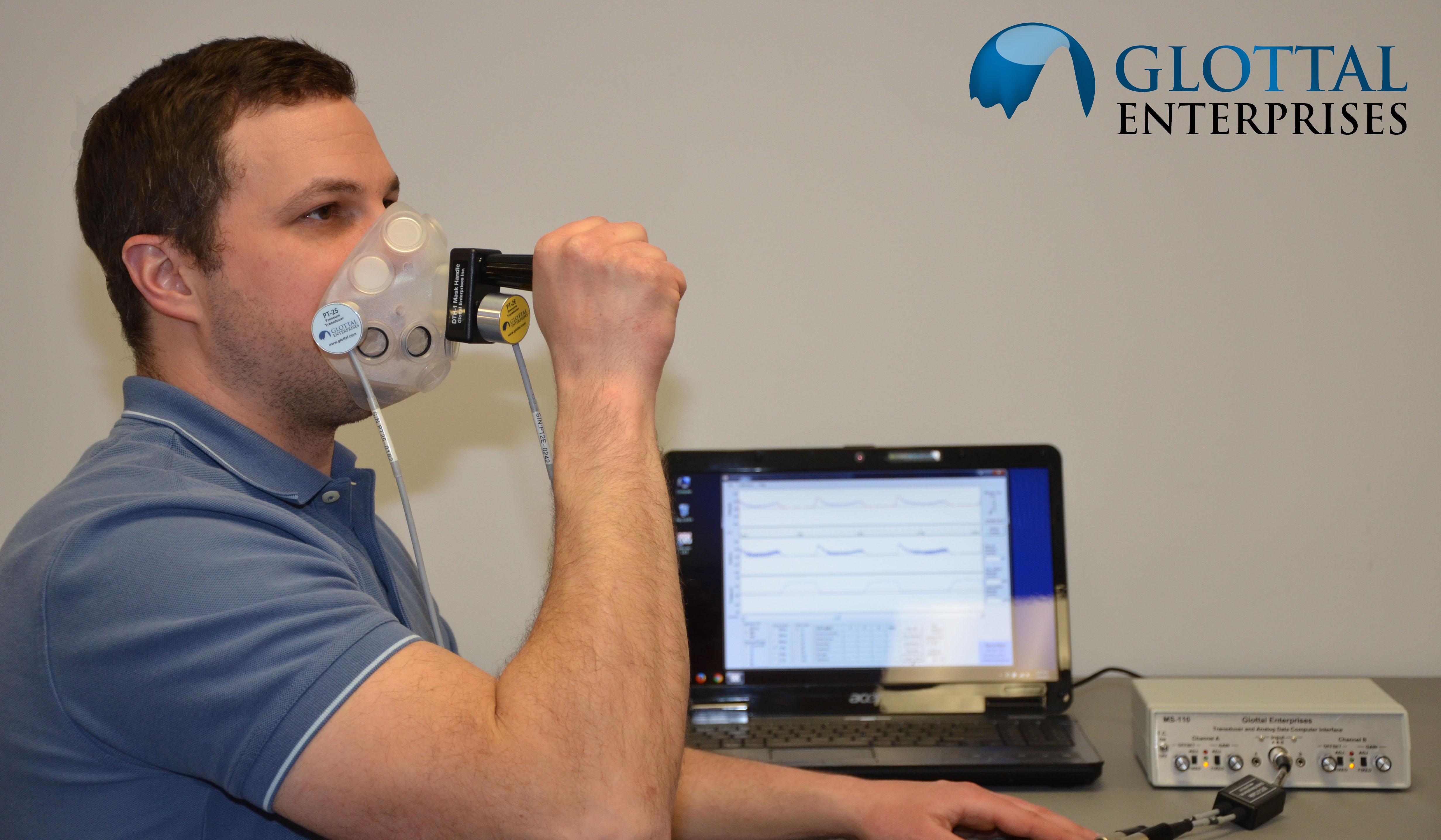
Speech Aerodynamics
Studies of the aerodynamics of speech production are conducted with our Glottal Enterprises oral and nasal airflow and pressure transducers.
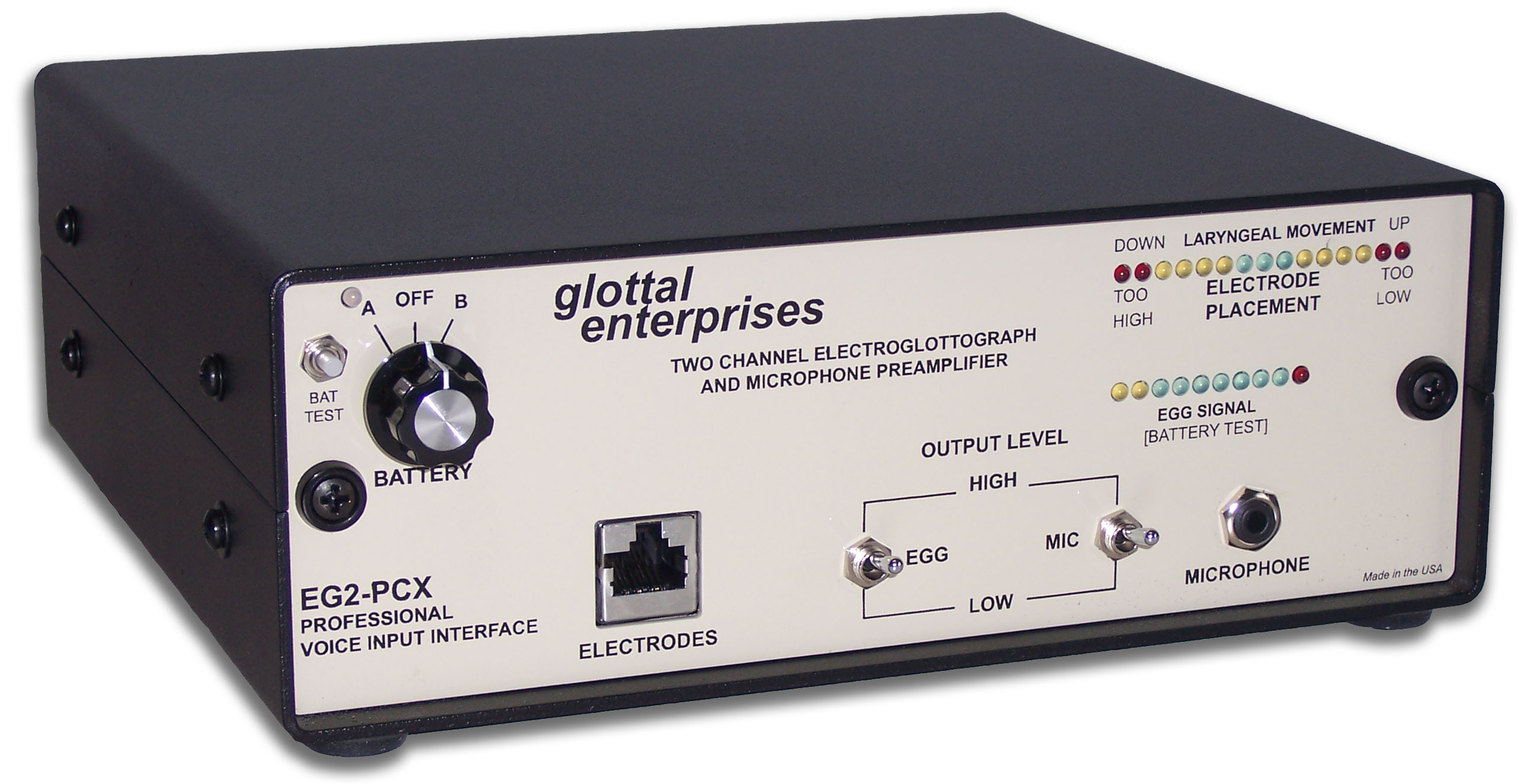
Electroglottography
We use a Glottal Enterprises EG-2 electroglottograph for noninvasive measurement of vocal fold vibration.
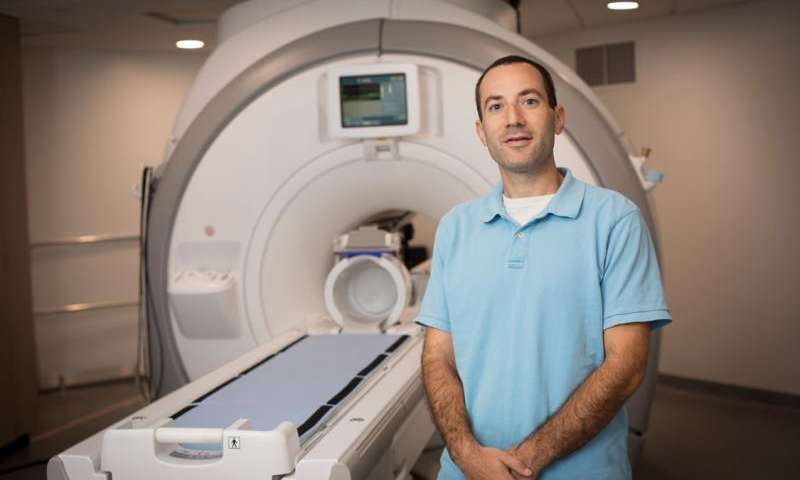
Real-time vocal tract MRI
Our lab is part of the Cornell Speech Imaging Group (SIG), a cross-disciplinary team of researchers using real-time magnetic resonance imaging to study the dynamics of speech articulation.
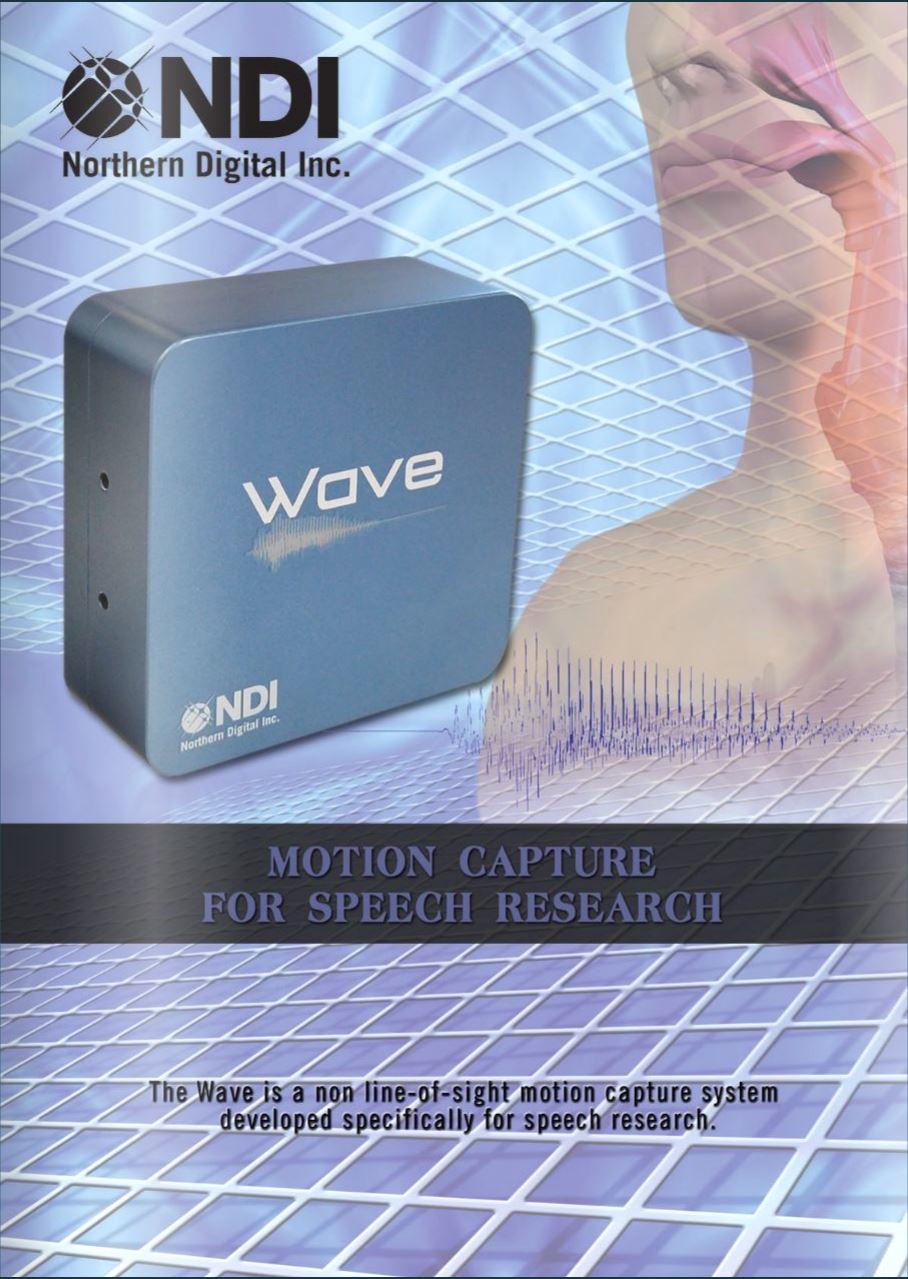
Articulatory movement tracking
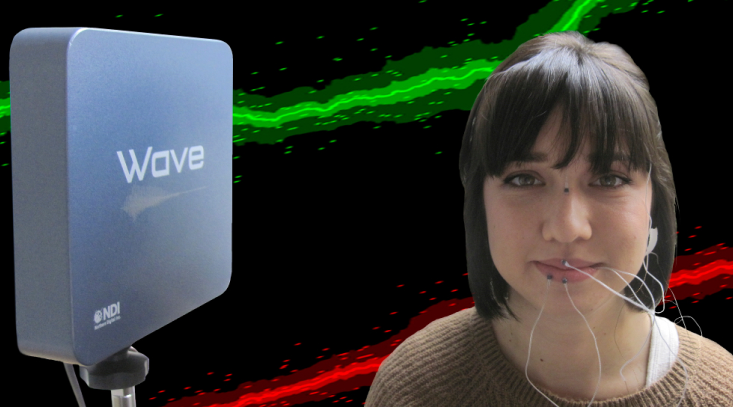
We use the Northern Digital Inc. Wave motion-capture system to study speech articulatory patterns and motor control.
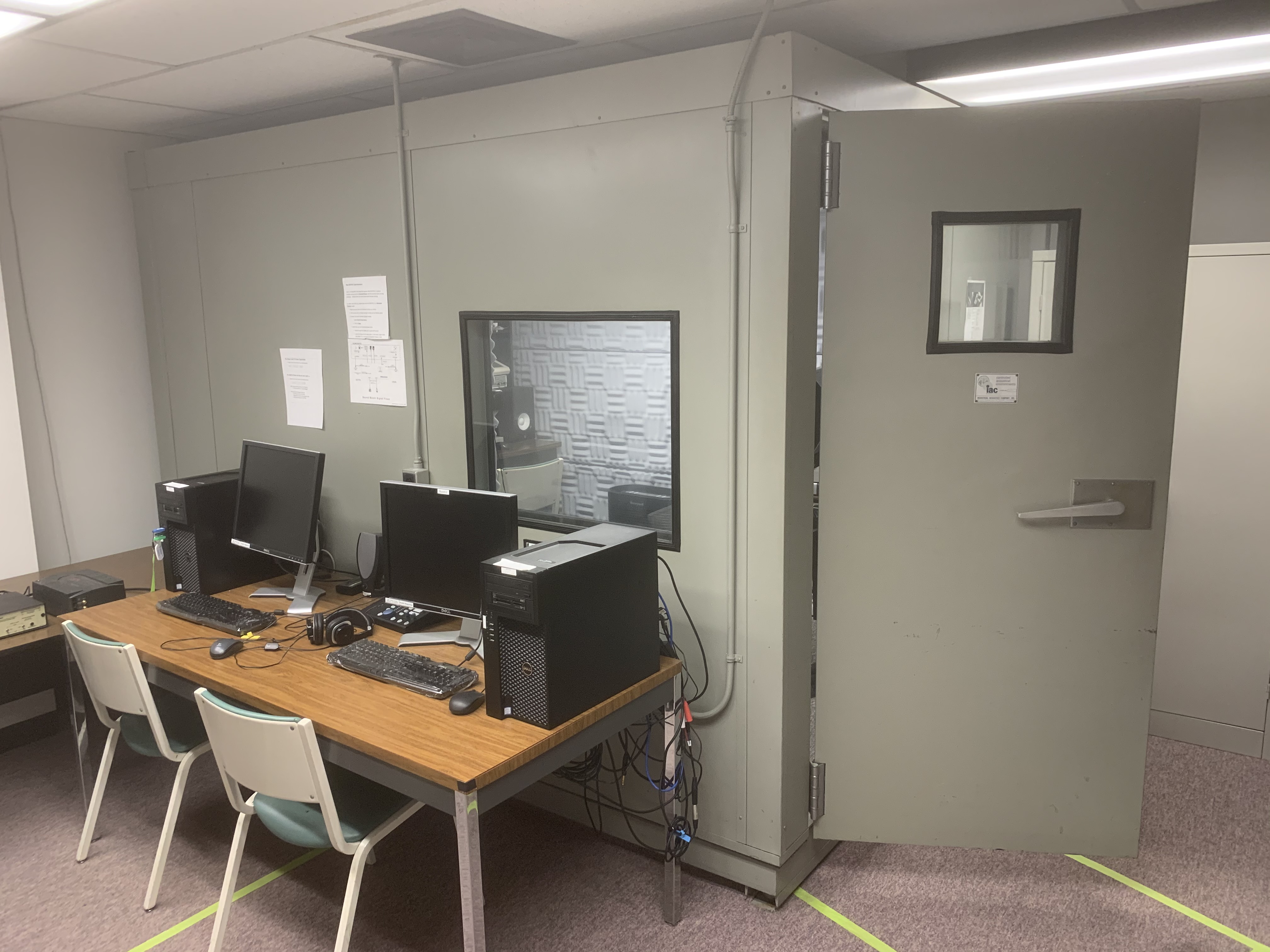
Sound Booth
Our isolated sound recording booth serves a range of purposes--from basic recording to perceptual, psycholinguistic, and ultrasonic experimentation.
We also have the necessary software and audio interfaces to perform low latency real-time auditory feedback experiments via MATLAB and Audapter.
©Copyright 2020, Cornell University