About
The Cornell Phonetics Lab is a group of students and faculty who are curious about speech. We study patterns in speech — in both movement and sound. We do a variety research — experiments, fieldwork, and corpus studies. We test theories and build models of the mechanisms that create patterns. Learn more about our Research. See below for information on our events and our facilities.
Upcoming Events
/index.jpg)
9th September 2026 12:20 PM
PhonDAWG - Phonetics Lab Data Analysis Working Group
Our new postdoctoral fellow Dr. Kayla (KyungA) Lee will present her draft poster titled: L2 Perception and Perceptual Confusions of English Fricatives by EFL Learners: A One-Year Longitudinal Study.
She will present this poster at the 2026 PSLLT (Pronunciation in Second Language Learning and Teaching) Conference, held at Iowa State University from September 10-12, 2026.
Poster Abstract:
This study examines how young Korean EFL learners develop L2 perception over one year, in relation to functional load and L1–L2 phonological distance. As Korean and English differ substantially in their phonological inventories, learners may experience persistent difficulty perceiving certain contrasts, which can affect later pronunciation and listening development. Participants were 112 Korean
elementary EFL learners in Grades 4–5 who completed identification tasks at two time points across one year.The tasks targeted eight English fricatives (/f, θ, s, ʃ, h, v, ð, z/) across multiple vowel contexts using HVPT stimuli (Thomson, 2018). Responses were analyzed using confusion matrices and multidimensional scaling to examine perceptual patterns. Overall, learners showed improved L2 perception over time, with reduced confusion.
This overall improvement was also reflected in a decrease in the mean similarity of confusion (voiceless: 0.417 to 0.314; voiced: 0.483 to 0.414). The largest gains were observed for /s–ʃ/ and /ð–z/, while /f–θ/ remained the most difficult. Notably, high functional load contrasts did not consistently show greater improvement, suggesting that communicative importance alone does not predict acquisition.
These findings highlight the need for pronunciation instruction targeting learner-specific perceptual difficulty and underscore the close relationship between perception and speech development in young learners.
Location: B11 Morrill Hall, 159 Central Avenue, Morrill Hall, Ithaca, NY 14853-4701, USA
14th September 2026 12:20 PM
Phonetics Lab Meeting
We will discuss this paper by Caleb Belth - "When are Alternations Learned" - abstract below:
Abstract:
Because the acquisition of phonotactics begins before the acquisition of morphology, it is possible that phonotactic knowledge underlies the acquisition of alternations, at least when the two align. An example is final devoicing.
The typical analysis is that alternating obstruents are underlyingly voiced but devoiced in final position, avoiding a phonotactic violation. If phonotactic knowledge underlies alternation learning, acquisition of alternations should follow rapidly after the acquisition of the morphology that produces violations.
Yet different languages with voicing alternations show developmental differences: Dutch-learning children’s developing knowledge is more restricted than that of their German-learning peers.
I hypothesize that children begin attending to alternations, and form non-surface-faithful representations, not as a reflex of phonotactic knowledge, but in response to being unable to morphologically generalize without doing so.
Implemented as an incremental learning model, the proposal explains observed developmental trajectories, with implications for our understanding of alternations and non-surface-faithful representations.
Location: B11 Morrill Hall, 159 Central Avenue, Morrill Hall, Ithaca, NY 14853-4701, USA
16th September 2026 12:20 PM
Phonetics Lab Meeting
We will discuss this paper On the relationship between perception and production of L2 sounds: Evidence from Anglophones' processing of the French /u/-/y/ contrast, Gerda Ana Melnik-Leroy, Rory Turbull, and Sharon Peperkamp.
Abstract:
Previous studies have yielded contradictory results on the relationship between perception and production in second language (L2) phonological processing.
We re-examine the relationship between the two modalities both within and across processing levels, addressing several issues regarding methodology and statistical analyses. We focus on the perception and production of the French contrast /u/–/y/ by proficient English-speaking late learners of French.
In an experiment with a prelexical perception task (ABX discrimination) and both a prelexical and a lexical production task (pseudoword reading and picture naming), we observe a robust link between perception and production within but not across levels.
Moreover, using a clustering analysis we provide evidence that good perception is a prerequisite for good production.
Location: B11 Morrill Hall, 159 Central Avenue, Morrill Hall, Ithaca, NY 14853-4701, USA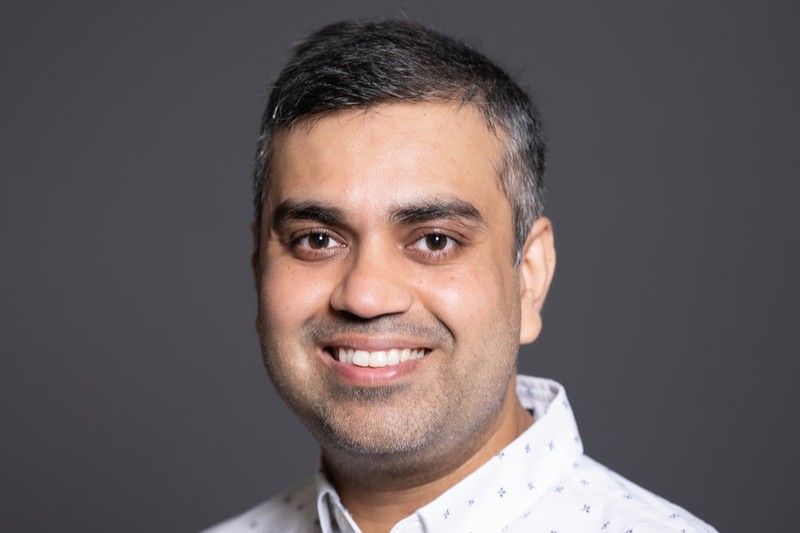
1st October 2026 04:30 PM
Linguistics Colloquium Speaker: Aditya Vashistha
The Department of Linguistics proudly presents Dr. Aditya Vashistha, assistant professor in the Cornell Ann S. Bowers College of Computing and Information Science.
Bio:
Dr. Vashistha is an Assistant Professor in the Cornell Ann S. Bowers College of Computing and Information Science and the leader of the Cornell Global AI Initiative—an interdisciplinary, university-wide effort to integrate global perspectives into the design, evaluation, and governance of AI technologies. He is also a non-resident fellow at the Center for Democracy & Technology.
Dr. Vashistha designs, builds, and evaluates Globally Equitable AI technologies that improve socioeconomic outcomes for marginalized communities. His work integrates human-centered methods, computational audits, and field evaluations to ensure that AI systems are safe, inclusive, and grounded in local contexts. His research program advances three interconnected thrusts:
- Information Equity: Understanding and countering harmful content in multilingual and socially stratified communities.
- Representational Equity: Examining and mitigating cultural, identity, and disability biases in AI through computational audits, cross-cultural studies, and new benchmarks.
- Contextual Equity: Designing and evaluating Responsible AI systems for frontline workers in health and education, with deployed systems now supporting thousands of people.
More broadly, his research lies at the intersection of Human-AI Interaction (HAI), Responsible AI, and ICT for Development (ICTD).
Before Cornell, he completed a Ph.D. in Computer Science and Engineering at the University of Washington, where his dissertation was recognized with the William Chan Memorial Dissertation Award and the WAGS/ProQuest Innovation in Technology Award.
Location: 106 Morrill Hall, 159 Central Avenue, Morrill Hall, Ithaca, NY 14853-4701, USA
Facilities
The Cornell Phonetics Laboratory (CPL) provides an integrated environment for the experimental study of speech and language, including its production, perception, and acquisition.
Located in Morrill Hall, the laboratory consists of six adjacent rooms and covers about 1,600 square feet. Its facilities include a variety of hardware and software for analyzing and editing speech, for running experiments, for synthesizing speech, and for developing and testing phonetic, phonological, and psycholinguistic models.
Web-Based Phonetics and Phonology Experiments with LabVanced
The Phonetics Lab licenses the LabVanced software for designing and conducting web-based experiments.
Labvanced has particular value for phonetics and phonology experiments because of its:
- *Flexible audio/video recording capabilities and online eye-tracking.
- *Presentation of any kind of stimuli, including audio and video
- *Highly accurate response time measurement
- *Researchers can interactively build experiments with LabVanced's graphical task builder, without having to write any code.
Students and Faculty are currently using LabVanced to design web experiments involving eye-tracking, audio recording, and perception studies.
Subjects are recruited via several online systems:
- * Prolific and Amazon Mechanical Turk - subjects for web-based experiments.
- * Sona Systems - Cornell subjects for for LabVanced experiments conducted in the Phonetics Lab's Sound Booth

Computing Resources
The Phonetics Lab maintains two Linux servers that are located in the Rhodes Hall server farm:
- Lingual - This Ubuntu Linux web server hosts the Phonetics Lab Drupal websites, along with a number of event and faculty/grad student HTML/CSS websites.
- Uvular - This Ubuntu Linux dual-processor, 24-core, two GPU server is the computational workhorse for the Phonetics lab, and is primarily used for deep-learning projects.
In addition to the Phonetics Lab servers, students can request access to additional computing resources of the Computational Linguistics lab:
- *Badjak - a Linux GPU-based compute server with eight NVIDIA GeForce RTX 2080Ti GPUs
- *Compute server #2 - a Linux GPU-based compute server with eight NVIDIA A5000 GPUs
- *Oelek - a Linux NFS storage server that supports Badjak.
These servers, in turn, are nodes in the G2 Computing Cluster, which currently consists of 195 servers (82 CPU-only servers and 113 GPU servers) consisting of ~7400 CPU cores and 698 GPUs.
The G2 Cluster uses the SLURM Workload Manager for submitting batch jobs that can run on any available server or GPU on any cluster node.
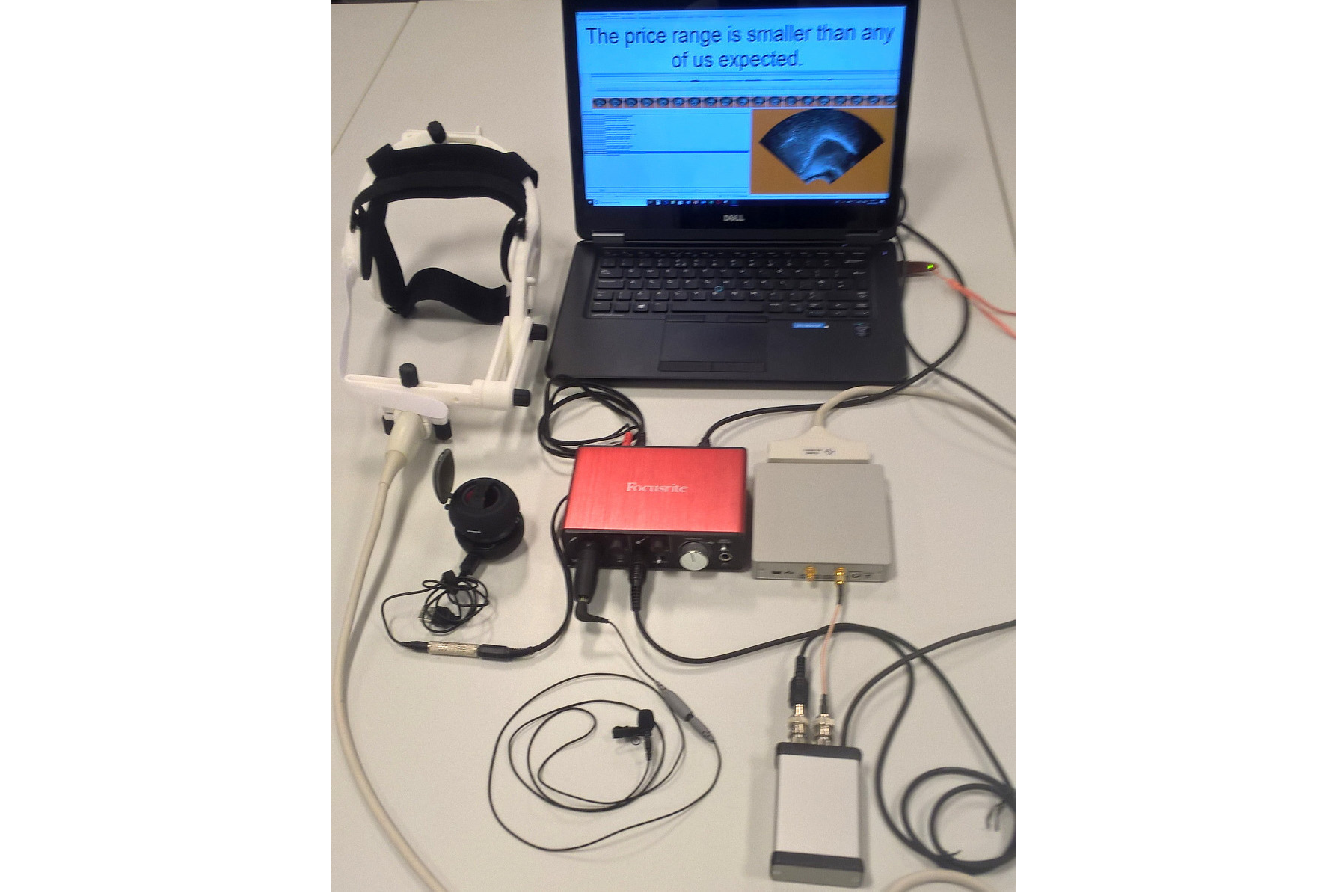
Articulate Instruments - Micro Speech Research Ultrasound System
We use this Articulate Instruments Micro Speech Research Ultrasound System to investigate how fine-grained variation in speech articulation connects to phonological structure.
The ultrasound system is portable and non-invasive, making it ideal for collecting articulatory data in the field.
BIOPAC MP-160 System
The Sound Booth Laboratory has a BIOPAC MP-160 system for physiological data collection. This system supports two BIOPAC Respiratory Effort Transducers and their associated interface modules.
/index.png)
Language Corpora
- The Cornell Linguistics Department has more than 915 language corpora from the Linguistic Data Consortium (LDC), consisting of high-quality text, audio, and video corpora in more than 60 languages. In addition, we receive three to four new language corpora per month under an LDC license maintained by the Cornell Library.
- This Linguistic Department web page lists all our holdings, as well as our licensed non-LDC corpora.
- These and other corpora are available to Cornell students, staff, faculty, post-docs, and visiting scholars for research in the broad area of "natural language processing", which of course includes all ongoing Phonetics Lab research activities.
- This Confluence wiki page - only available to Cornell faculty & students - outlines the corpora access procedures for faculty supervised research.

Speech Aerodynamics
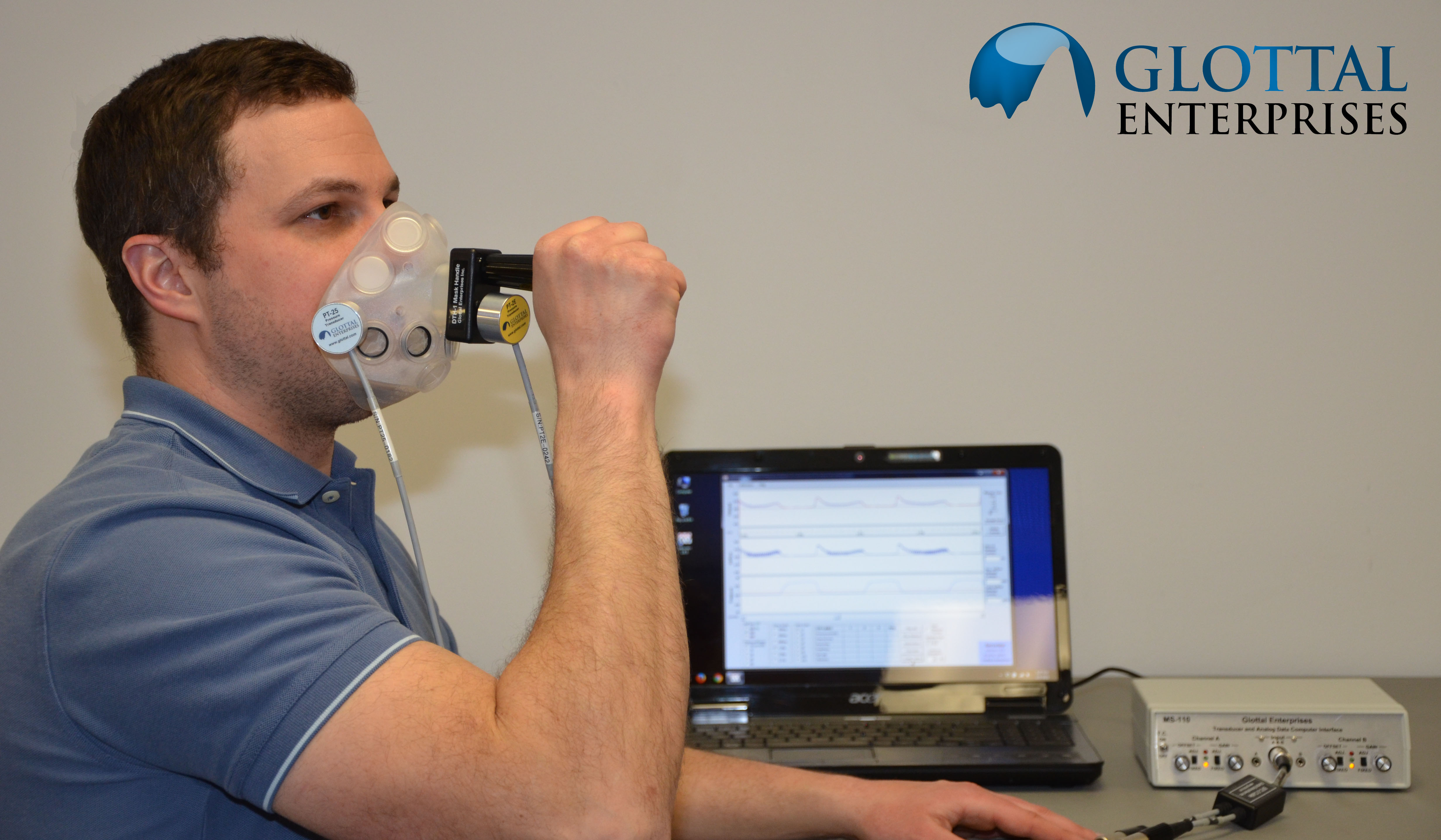
Studies of the aerodynamics of speech production are conducted with our Glottal Enterprises oral and nasal airflow and pressure transducers.
Electroglottography
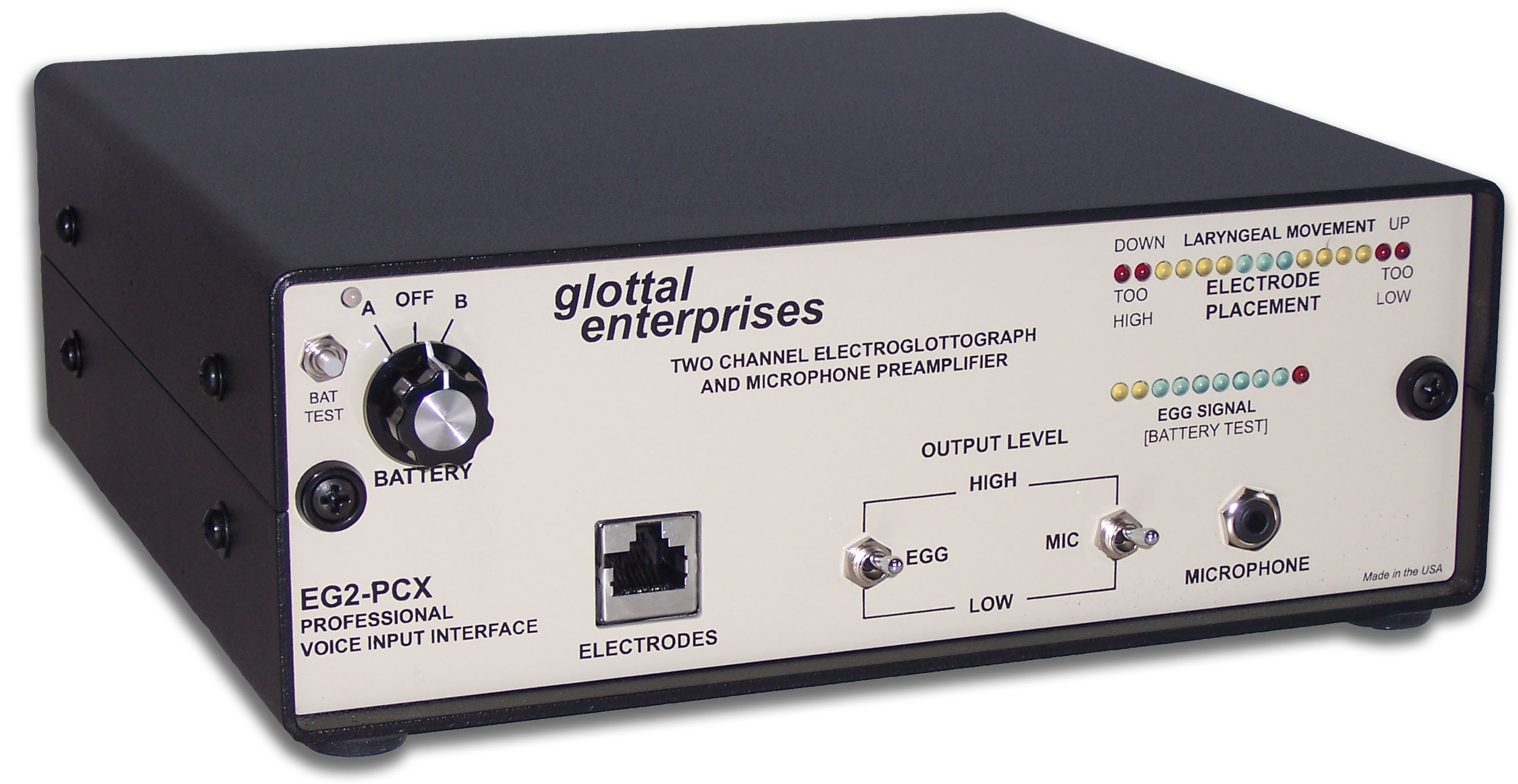
We use a Glottal Enterprises EG-2 electroglottograph for noninvasive measurement of vocal fold vibration.
Real-time vocal tract MRI
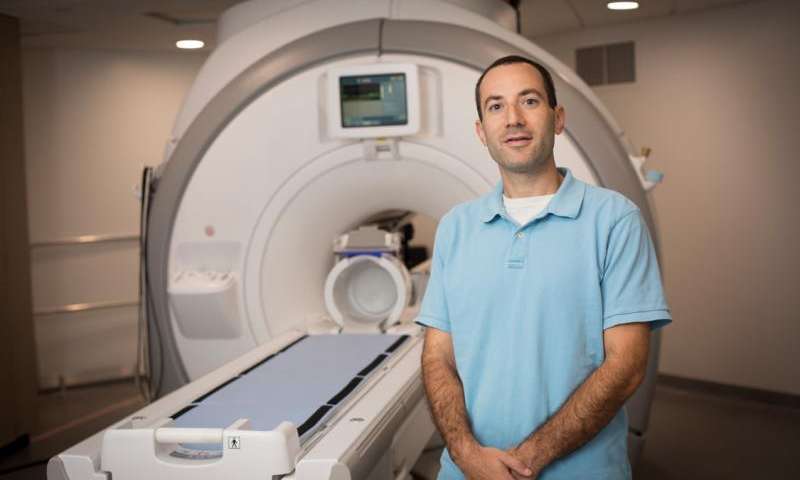
Our lab is part of the Cornell Speech Imaging Group (SIG), a cross-disciplinary team of researchers using real-time magnetic resonance imaging to study the dynamics of speech articulation.
Articulatory movement tracking
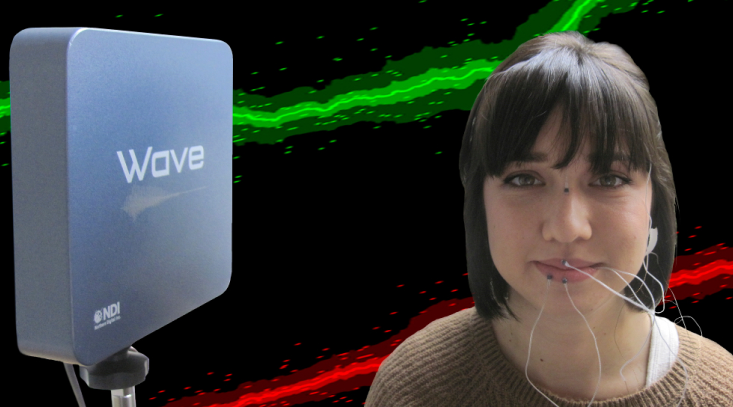
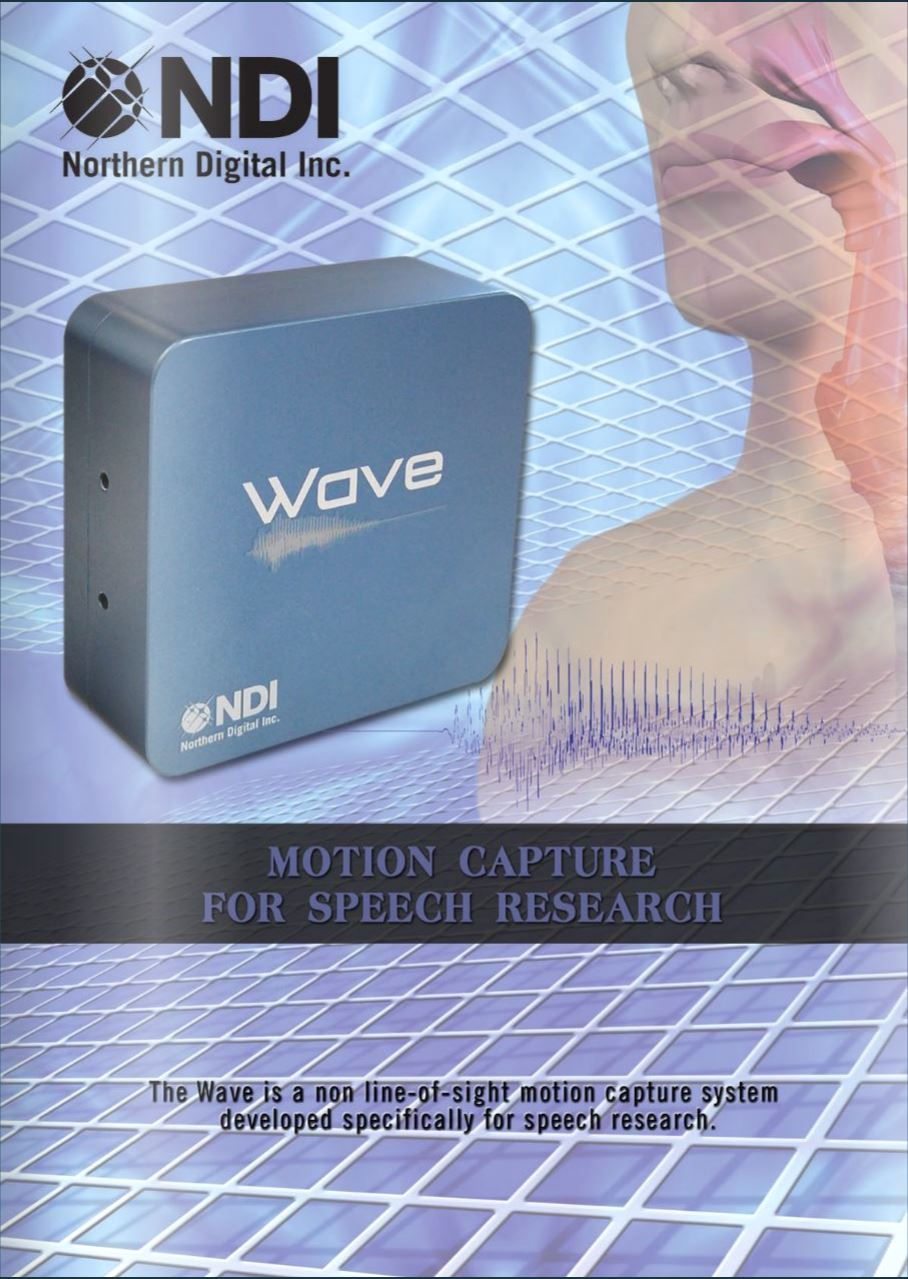
We use the Northern Digital Inc. Wave motion-capture system to study speech articulatory patterns and motor control.
Sound Booth
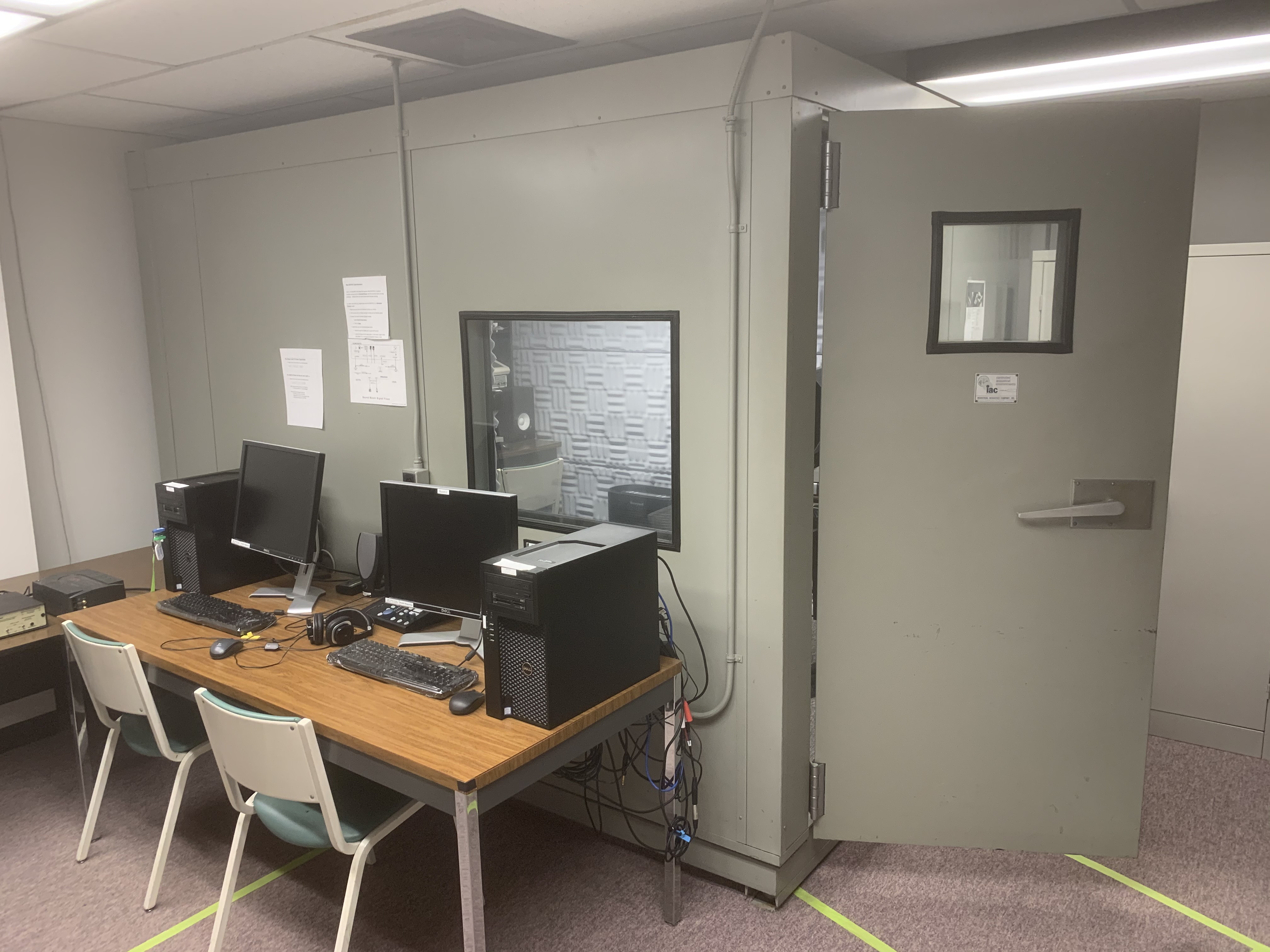
Our isolated sound recording booth serves a range of purposes--from basic recording to perceptual, psycholinguistic, and ultrasonic experimentation.
We also have the necessary software and audio interfaces to perform low latency real-time auditory feedback experiments via MATLAB and Audapter.
©Copyright 2020, Cornell University