About
The Cornell Phonetics Lab is a group of students and faculty who are curious about speech. We study patterns in speech — in both movement and sound. We do a variety research — experiments, fieldwork, and corpus studies. We test theories and build models of the mechanisms that create patterns. Learn more about our Research. See below for information on our events and our facilities.
Upcoming Events
5th October 2026 12:20 PM
Phonetics Lab Meeting
Faolan and Yao will give practice presentations for AMP 2026 (Annual Meeting on Phonology 2026), which will be held October 9-22, 2026 at the University of Maryland, College Park.
Location: B11 Morrill Hall, 159 Central Avenue, Morrill Hall, Ithaca, NY 14853-4701, USA
7th October 2026 12:20 PM
Phonetics Lab Meeting
Sam and Abby will provide advice on job interview preparation.
Location: B11 Morrill Hall, 159 Central Avenue, Morrill Hall, Ithaca, NY 14853-4701, USA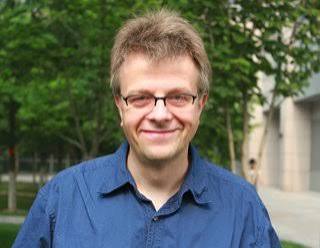
8th October 2026 04:30 PM
Linguistics Colloquium Speaker: Juergen Bohnemeyer
The Department of Linguistics proudly presents Dr. Juergen Bohnemeyer, Professor of Linguistics at the University at Buffalo.
Dr. Bohnemeyer will speak on "Functional expressions: Typology and evolution".
Funded in part by the GPSAFC and Open to the Graduate Community.
Abstract:
This paper explores a typological puzzle: some functional expressions – e.g., expressions of negation, demonstratives, pro-forms, quantificational and modal expressions – are near-universally present in the languages of the world, whereas others, including definite articles and the traditional inflectional categories of tense, gender, case, and so on – vary drastically in their presence, with most types occurring very roughly in between one third and two thirds of human languages only.
What causes such distributional disparities? I argue that the answer lies in distinct communicative functions: the near-universally available expressions serve to encode parts of the speaker’s intended message, whereas the more variably distributed expressions have an ancillary function in facilitating the hearer’s inferences about the speaker’s communicative intent.
I propose a classification of functional expressions that takes into account discourse prominence (Boye & Harder 2012) and semantic type. I then sketch an evolutionary model of grammaticalization that includes a selective process sensitive to communicative fitness, contra Croft (2000). An empirically testable prediction of this model is that pragmatically overlapping types of functional expressions such as tense, viewpoint aspect and mood or indexing and lagging (Haspelmath 2019) should show evidence of partial complementarity in typological distributions due to tradeoff.
I am currently studying the evidence for such tradeoff relations in the Grambank database (Skirgård et al. 2023) in collaboration with Hedvig Skirgård (Max Planck Institute for Evolutionary Anthropology) and Scott Claessens (University of Bristol). I will summarize the current state of this project.
References
- *Boye, K. & P. Harder. (2012). A usage-based theory of grammaticalization and grammatical status. Language 88(1): 1-44.
- *Croft, W. (2000). Explaining language change: An evolutionary approach. Harlow: Pearson Education Limited.
- *Haspelmath, M. (2019). Indexing and flagging, and head and dependent marking. Te Reo 62(1): 93-115.
- *Skirgård, H. et al. (2023). Grambank reveals the importance of genealogical constraints on linguistic diversity and highlights the impact of language loss. Science Adances 9: eadg6175.
Bio:
Juergen specializes in semantic typology, the crosslinguistic study of universals and variation in semantic categorization. Semantic typologists investigate how languages vary and resemble one another in how they represent reality. He has conducted extensive research on the semantic typology of representations of space, time, events, and causality and on the Linguistic Relativity Hypothesis, according to which language-specificity in semantics may be a shaping factor in culture-specificity in nonverbal cognition.
An overarching theme of his research is the role of culture in cognition. He views this interest as part of a broader empiricist turn in the cognitive sciences. This paradigm shift or paradigm maturation process has been leading the field slowly away from its rationalist beginnings, which were heavily invested in assumptions of innateness, symbolic encoding, and modularity, toward a "Cognitive Science 2.0" that embraces individual and cultural variation and brain plasticity.
A closely related line of inquiry, which he has persued since the days of his doctoral research, is the emergence of functional categories in the languages of the world. Across space and time, unrelated languages have been evolving similar functional categories. Yet, the amount of observable crosslinguistic variation in the grammaticalization of such categories discourages simplistic innatist explanations. He has been developing an evolutionary approach that attributes crosslinguistic similarities in functional category systems to processes of cultural evolution responding to pressures of optimizing communication.
Location: 106 Morrill Hall, 159 Central Avenue, Morrill Hall, Ithaca, NY 14853-4701, USA
23rd October 2026 08:00 AM
CNY Language Sound Structure Meeting: Workshop on Tone in Speech Corpora
We will travel to Syracuse University for the two-day CNY Language Sound Structure Meeting of the LIN10 Workshop on Tone in Speech Corpora. LIN10 will focus on methodologies for studying tone in speech corpora, with a goal of discussing and debating current and newly developed tools and best practices in their implementation.
On Friday (Noon to 5:30PM) we will meet in room 500 in the Hall of Languages, where invited speaker Kathryn Franich (Harvard University) will share tools developed in her lab to study tonal prominences and their intersection with speech rhythm.
On Saturday in Kittredge Auditorium (10:00AM to 5:00PM), we will have a series of short talks and roundtable discussions centered upon the workshop’s overarching theme of tonal phonology.
This workshop is funded and made possible by the CNY Humanities Corridor. More information can be found at https://www.cnycorridor.net/. We thank the CNY corridor for making this event possible. We are also grateful to SU’s Department of Languages, Literatures, and Linguistics for making their spaces available for use during the event.
Location: Syracuse University, Syracuse, NY
Facilities
The Cornell Phonetics Laboratory (CPL) provides an integrated environment for the experimental study of speech and language, including its production, perception, and acquisition.
Located in Morrill Hall, the laboratory consists of six adjacent rooms and covers about 1,600 square feet. Its facilities include a variety of hardware and software for analyzing and editing speech, for running experiments, for synthesizing speech, and for developing and testing phonetic, phonological, and psycholinguistic models.
Web-Based Phonetics and Phonology Experiments with LabVanced
The Phonetics Lab licenses the LabVanced software for designing and conducting web-based experiments.
Labvanced has particular value for phonetics and phonology experiments because of its:
- *Flexible audio/video recording capabilities and online eye-tracking.
- *Presentation of any kind of stimuli, including audio and video
- *Highly accurate response time measurement
- *Researchers can interactively build experiments with LabVanced's graphical task builder, without having to write any code.
Students and Faculty are currently using LabVanced to design web experiments involving eye-tracking, audio recording, and perception studies.
Subjects are recruited via several online systems:
- * Prolific and Amazon Mechanical Turk - subjects for web-based experiments.
- * Sona Systems - Cornell subjects for for LabVanced experiments conducted in the Phonetics Lab's Sound Booth

Computing Resources
The Phonetics Lab maintains two Linux servers that are located in the Rhodes Hall server farm:
- Lingual - This Ubuntu Linux web server hosts the Phonetics Lab Drupal websites, along with a number of event and faculty/grad student HTML/CSS websites.
- Uvular - This Ubuntu Linux dual-processor, 24-core, two GPU server is the computational workhorse for the Phonetics lab, and is primarily used for deep-learning projects.
In addition to the Phonetics Lab servers, students can request access to additional computing resources of the Computational Linguistics lab:
- *Badjak - a Linux GPU-based compute server with eight NVIDIA GeForce RTX 2080Ti GPUs
- *Compute server #2 - a Linux GPU-based compute server with eight NVIDIA A5000 GPUs
- *Oelek - a Linux NFS storage server that supports Badjak.
These servers, in turn, are nodes in the G2 Computing Cluster, which currently consists of 195 servers (82 CPU-only servers and 113 GPU servers) consisting of ~7400 CPU cores and 698 GPUs.
The G2 Cluster uses the SLURM Workload Manager for submitting batch jobs that can run on any available server or GPU on any cluster node.
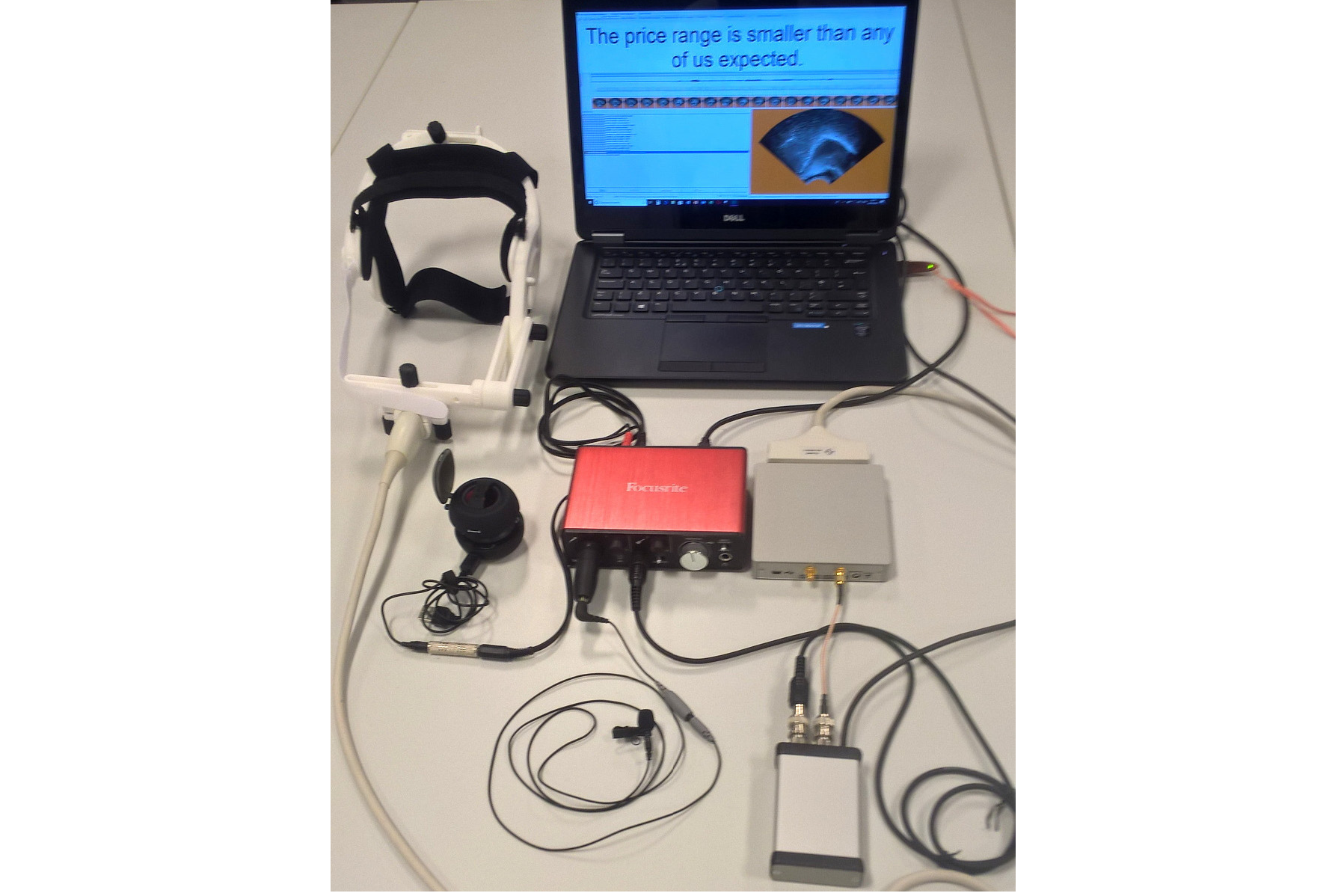
Articulate Instruments - Micro Speech Research Ultrasound System
We use this Articulate Instruments Micro Speech Research Ultrasound System to investigate how fine-grained variation in speech articulation connects to phonological structure.
The ultrasound system is portable and non-invasive, making it ideal for collecting articulatory data in the field.
BIOPAC MP-160 System
The Sound Booth Laboratory has a BIOPAC MP-160 system for physiological data collection. This system supports two BIOPAC Respiratory Effort Transducers and their associated interface modules.
/index.png)
Language Corpora
- The Cornell Linguistics Department has more than 915 language corpora from the Linguistic Data Consortium (LDC), consisting of high-quality text, audio, and video corpora in more than 60 languages. In addition, we receive three to four new language corpora per month under an LDC license maintained by the Cornell Library.
- This Linguistic Department web page lists all our holdings, as well as our licensed non-LDC corpora.
- These and other corpora are available to Cornell students, staff, faculty, post-docs, and visiting scholars for research in the broad area of "natural language processing", which of course includes all ongoing Phonetics Lab research activities.
- This Confluence wiki page - only available to Cornell faculty & students - outlines the corpora access procedures for faculty supervised research.
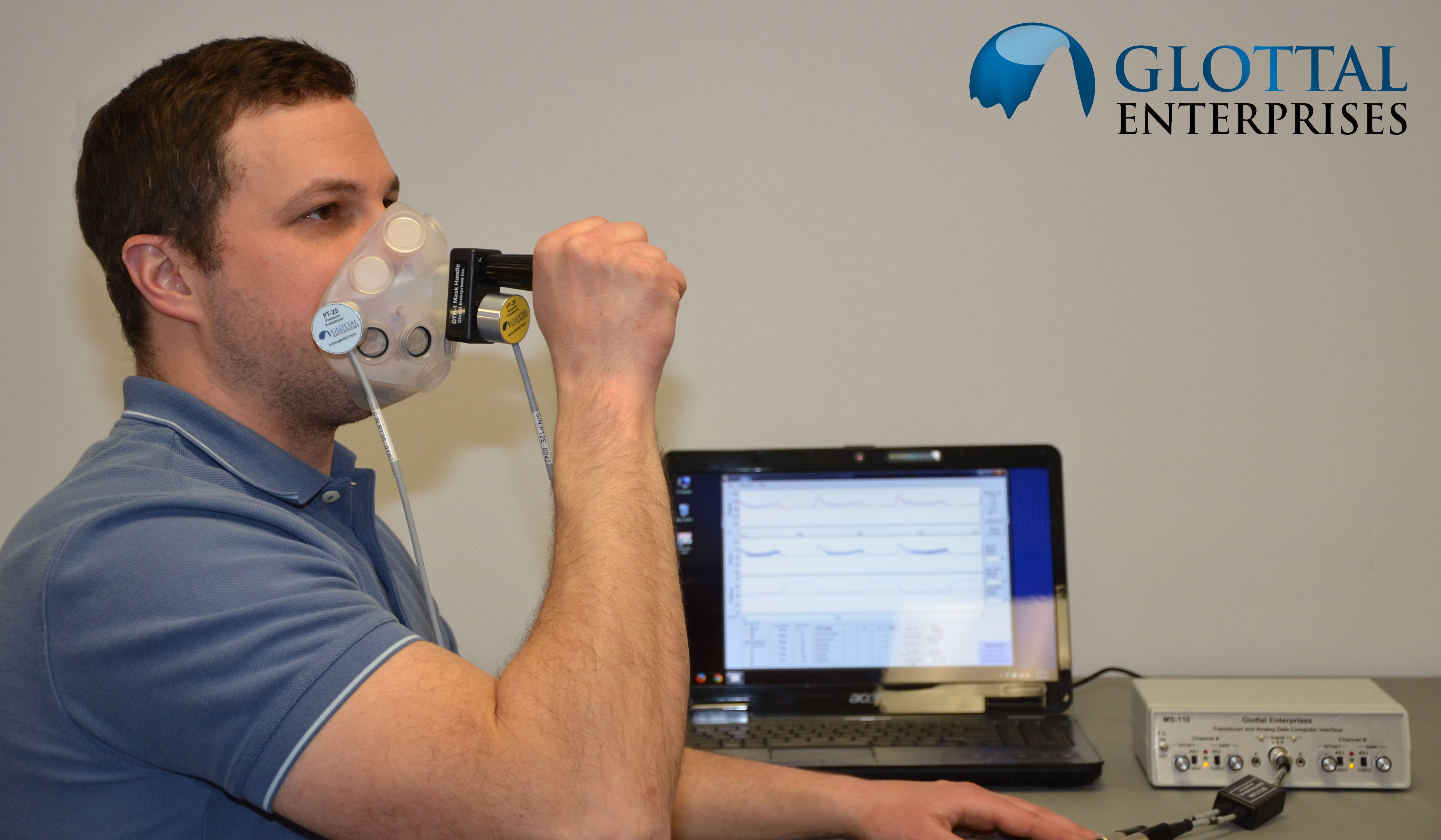
Speech Aerodynamics
Studies of the aerodynamics of speech production are conducted with our Glottal Enterprises oral and nasal airflow and pressure transducers.
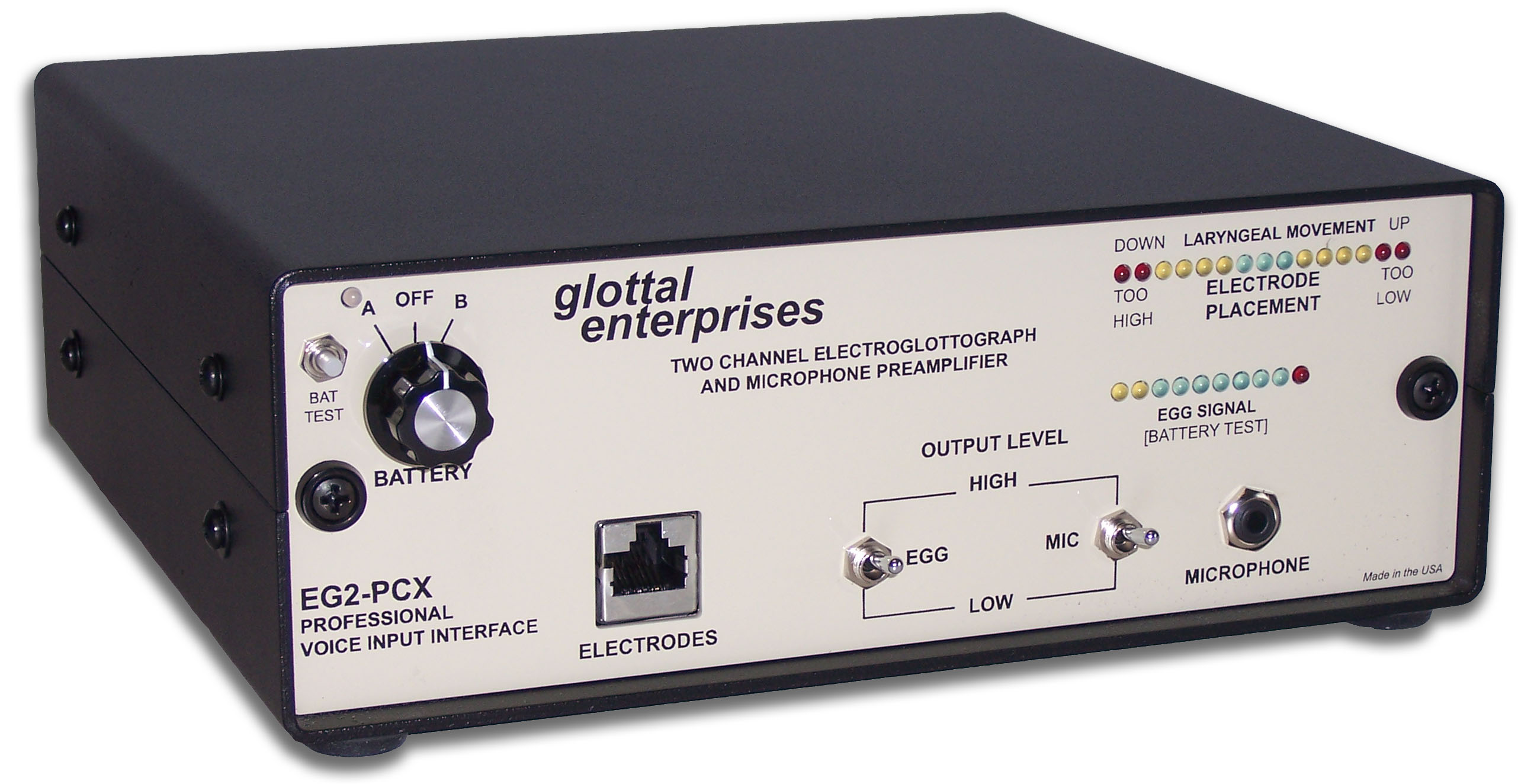
Electroglottography
We use a Glottal Enterprises EG-2 electroglottograph for noninvasive measurement of vocal fold vibration.
Real-time vocal tract MRI
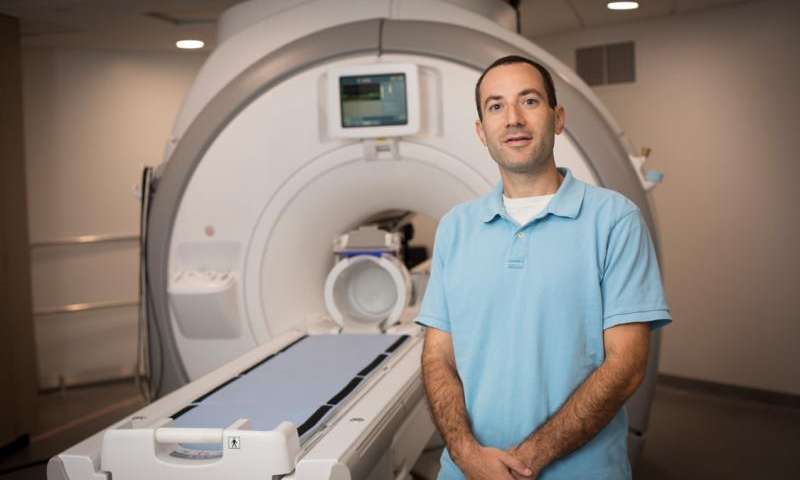
Our lab is part of the Cornell Speech Imaging Group (SIG), a cross-disciplinary team of researchers using real-time magnetic resonance imaging to study the dynamics of speech articulation.
Articulatory movement tracking
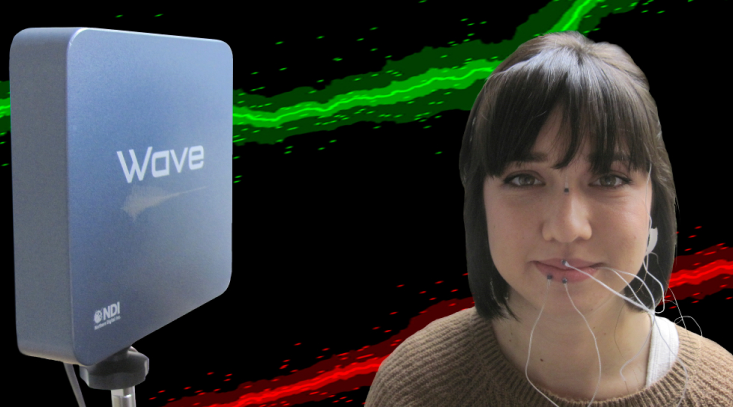
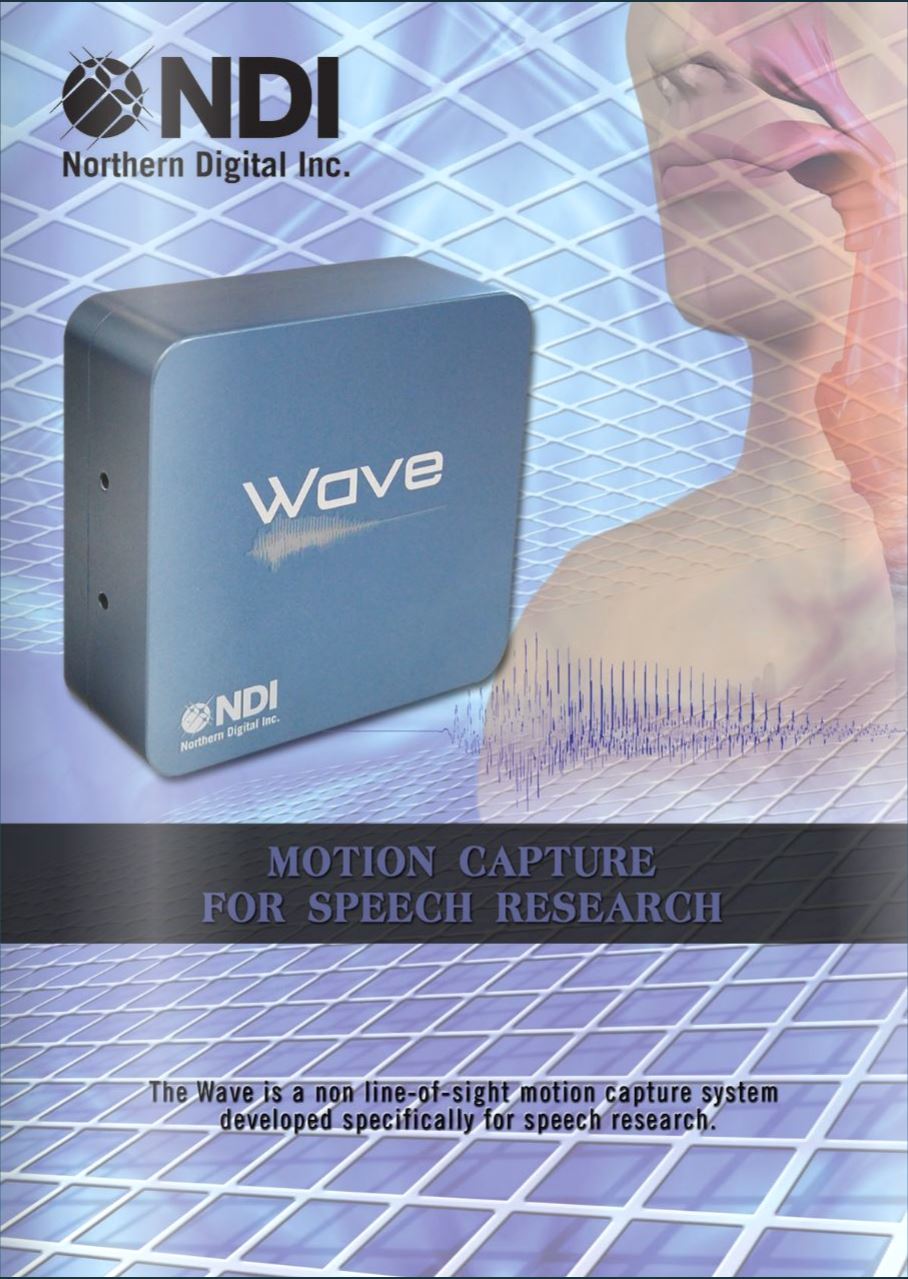
We use the Northern Digital Inc. Wave motion-capture system to study speech articulatory patterns and motor control.
Sound Booth
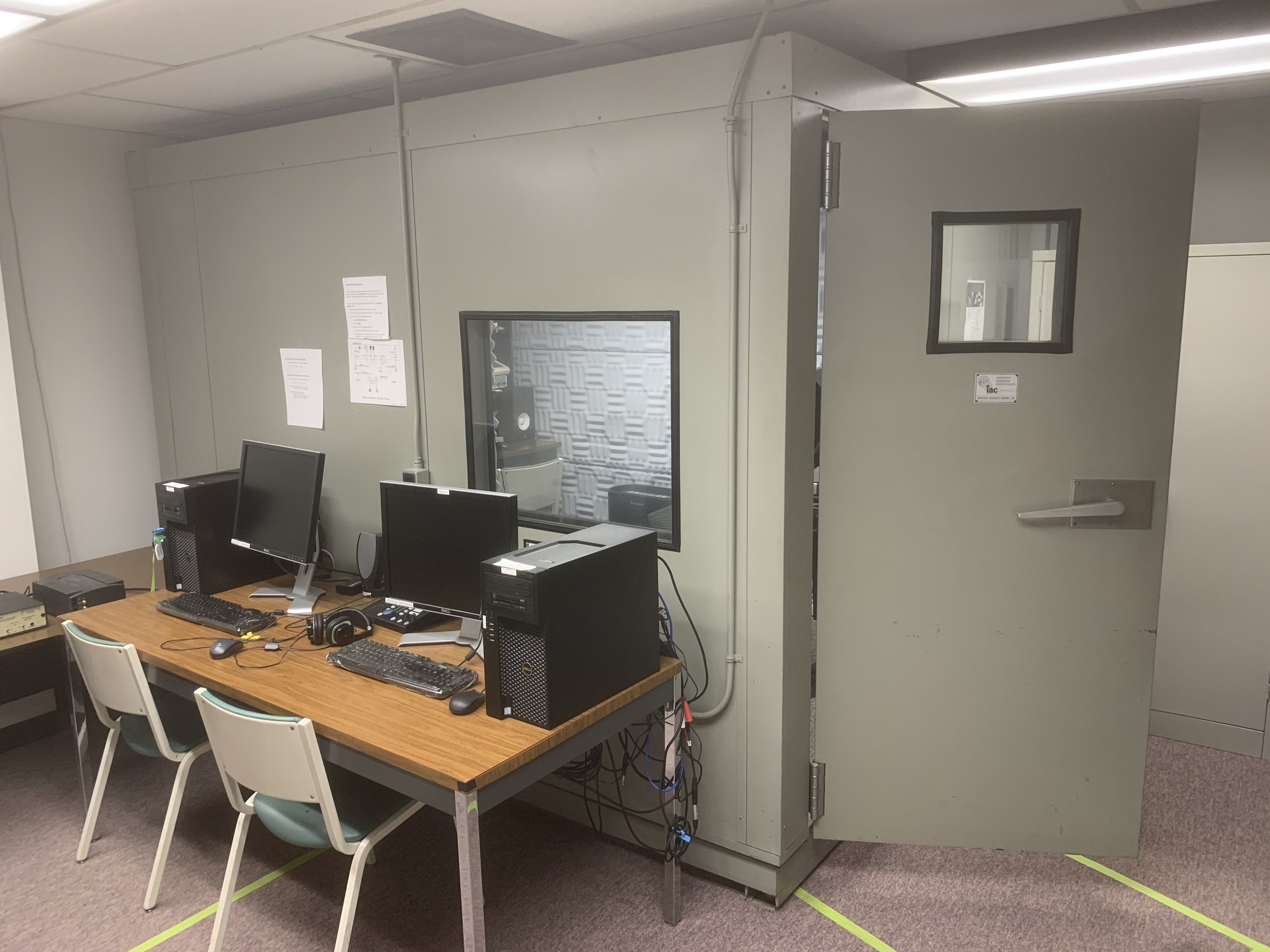
Our isolated sound recording booth serves a range of purposes--from basic recording to perceptual, psycholinguistic, and ultrasonic experimentation.
We also have the necessary software and audio interfaces to perform low latency real-time auditory feedback experiments via MATLAB and Audapter.
©Copyright 2020, Cornell University