News

John Whitman featured in front-page Cornell Daily Sun article
Phonetics lab member Dr. John Whitman was recently featured in a front-page article in Cornell's student newspaper the Cornell Daily Sun. The article described how John's passion for Linguistics was triggered by an introductory linguistics class. This eventually lead to a 39-year career at Cornell where he became a renowned expert on language variation and the linguistics of East Asian languages.
During this time John also became interested in the Cayogo̱hó꞉nǫˀ language of the Cayuga Nation, the American Indian people who lived on the land upon which Cornell was built. This interest lead to the development of a new Cornell Cayogo̱hó꞉nǫˀ language course, developed in partnership with first-language Cayogo̱hó꞉nǫˀ speaker, historian, and faithkeeper Arrell Stephen Henhawk.
John is retiring at the end of 2026, but as a Professor Emeritus, John will continue studying the Gayogo̱hó꞉nǫˀ language and the questions it raises about language variation.
21st November 2026
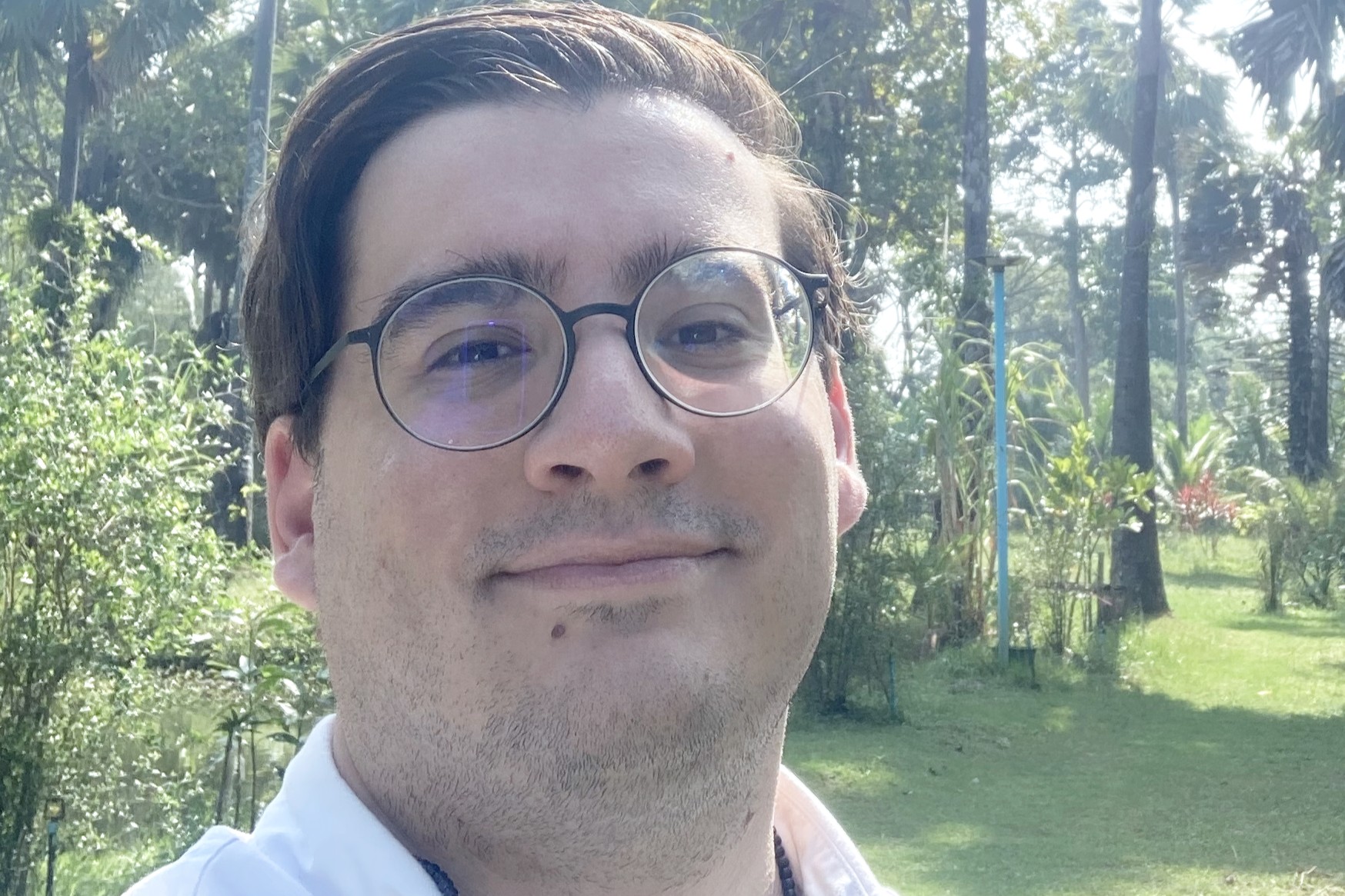
Phonetics Lab Alumnus Francesco Burroni is awarded a major research grant.
Phonetics Lab Alumnus Francesco Burroni (PhD 2023) was recently awarded a 480,000 euro ($527K USD), three-year research grant from the German Research Foundation titled: The Temporal and Rhythmic Organization of Phonological Structure: A Real-Time MRI Investigation of Italian and Japanese (see abstract below).
As the project lead, Francesco will conduct real-time MRI studies that analyze and compare the rhythmic/temporal organization of Italian and Japanese speech.
This award is a significant achievement for Francesco, who is currently a Postdoctoral Fellow at the Institute for Phonetics and Speech Processing (IPS), Ludwig Maximilian University of Munich.
Awards of this magnitude and technical challenge are rarely given to post-doctoral fellows, which speaks volumes about Francesco's academic talent and work ethic. We eagerly look forward to reading Francesco's publications from this ground-breaking research.
Project Abstract:
When we speak, we produce sounds through the precise orchestration of complex vocal tract actions unfolding in time. This project asks a fundamental question: Do different languages organize this temporal coordination in fundamentally different ways, or do they obey the same underlying principles?
We compare Italian and Japanese, two languages with similar speech sounds but potentially different temporal organization. Italian is traditionally described as syllable-based, with timing organized around larger units, while Japanese is considered mora-based and organized around smaller timing units.
However, this distinction has never been definitively established through direct observation of speech movements. If languages differ in how timing is grammatically organized, these differences should not only shape speech production but may also influence patterns of sound change over time.
Distinct modes of temporal coordination can create different phonetic biases: patterns of overlap, reduction, and variability that accumulate and may favor certain diachronic developments in one language but not another. Understanding temporal organization is therefore crucial both for synchronic and diachronic phonological theory and description.
Using real-time MRI, we image the vocal tract while native speakers of Italian and Japanese produce speech. This technology allows us to see how the tongue, lips, jaw, and soft palate move in real time, providing direct evidence of how speakers coordinate articulatory gestures.
We test three main predictions:
- -First, when consonants become longer, do Italian and Japanese speakers adjust timing differently?
- -Second, in complex sounds requiring multiple simultaneous movements (such as nasal-consonant clusters), are these movements coordinated more tightly in one language than in the other?
- -Third, when transitioning from one vowel to another, do speakers of the two languages plan ahead differently?
The findings will help determine whether temporal organization is a core grammatical property that varies across languages, or whether it reflects universal constraints of the human speech system.
The project will also produce the first comprehensive real-time MRI dataset of Italian and Japanese speech.
20th November 2026
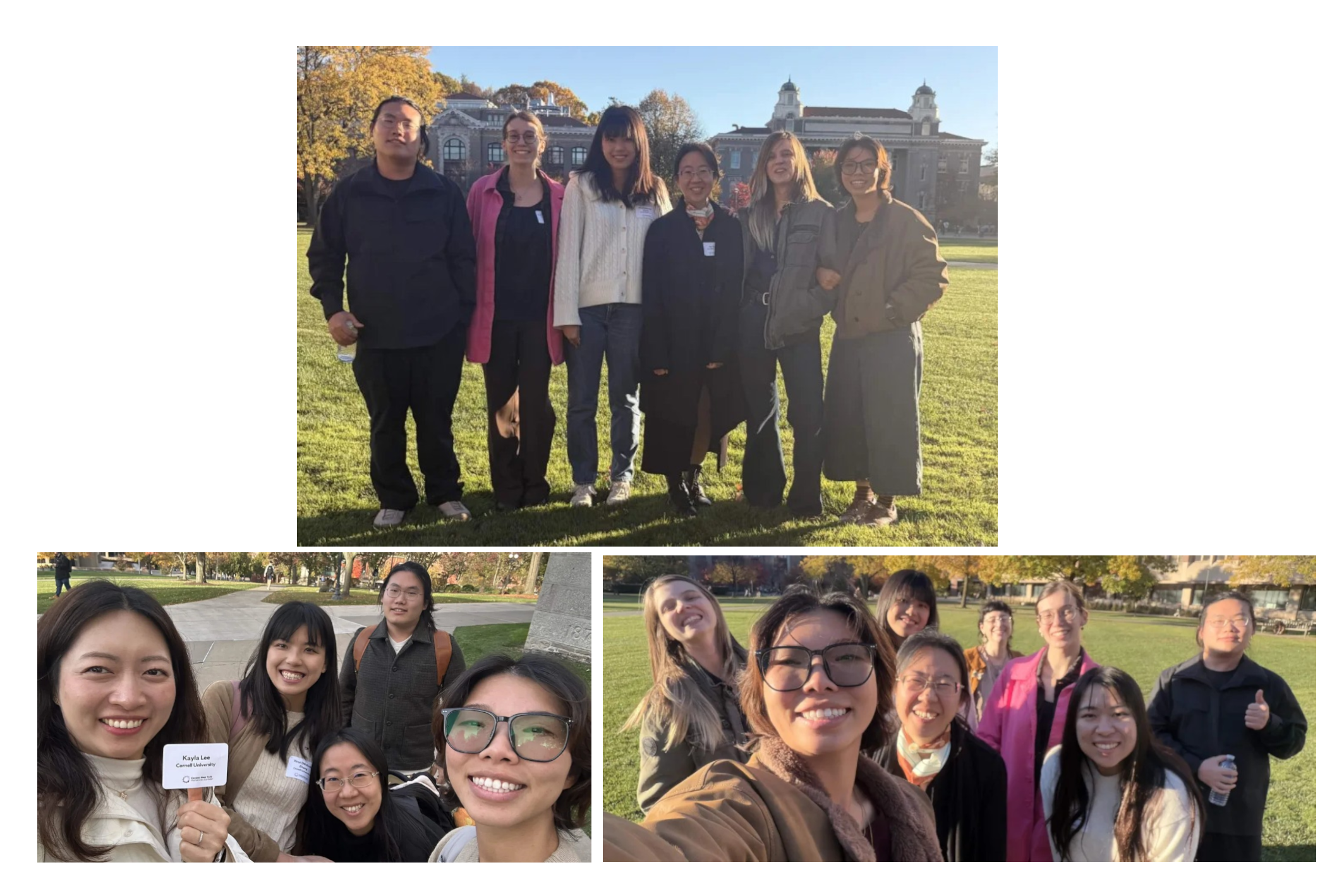
Phonetics Lab travels to Syracuse for the CNY Sound Structure Meeting
The Phonetics Lab traveled to Syracuse, NY on Friday, October 23rd and Saturday, October 24th, 2026 for the for the two-day CNY Language Sound Structure Meeting of the LIN10 Workshop on Tone in Speech Corpora. LIN10 focuses on methodologies for studying tone in speech corpora, with a goal of discussing and debating current and newly developed tools and best practices in their implementation.
On Friday, Phonetics Lab faculty and grad students heard invited speaker Kathryn Franich (Harvard University) discuss tools developed in her lab to study tonal prominences and their intersection with speech rhythm. And on Saturday they heard short talks and roundtable discussions centered upon the workshop’s overarching theme of tonal phonology.
This workshop was funded and made possible by the CNY Humanities Corridor. More information can be found at https://www.cnycorridor.net/. We thank the CNY corridor for making this event possible. We are also grateful to Syracuse University's Department of Languages, Literatures, and Linguistics for making their spaces available for use during the event.
(Phonetics Lab members shown in the photos - Kayla (Kyunga) Lee, Xinyi (Melinda) Zhang, Yao Zhang, Xiaotian Liu, Fengyue (Lisa) Zhao, Annabelle di Lustro, and Faolan Boyd)
16th November 2026

Fengyue (Lisa) Zhao awarded a Hu Shih Fellowship
PhD Candidate Fengyue (Lisa) Zhao was recently awarded a Hu Shih Fellowship in Chinese Studies for her work on Mandarin Tone Production in Noise (see abstract below).
The Hu Shih Fellowship is awarded through Cornell's East Asia Program (EAP) to support graduate students conducting research related to East Asia.
This merit-based fellowship provides Fengyue (Lisa) financial support for one semester without teaching obligations, and allows her to focus full-time on her dissertation research.
The Hu Shih Fellowship in Chinese Studies is named after Cornell Alumnus Hu Shih (Class of 1914). Hu Shih was a Chinese citizen born in the later years of the Quing Dynasty, and was one of the early East Asian students at Cornell. Following graduation he served as the Chinese Ambassador to the United States from 1938 to 1942, and was the Chancellor of Peking University from 1946 to 1948. He was also active in Chinese linguistics and language issues and advocated using written vernacular Chinese in poetry and literature. For his contributions in this area, he was nominated for the 1957 Nobel Prize in Literature.
Abstract:
Mandarin Tone Production in Noise: Effects of Auditory Feedback Availability Across Native, Heritage, and English L2 Speakers
Speech production relies on the dynamic interplay between feedforward motor plans—internally generated motor commands that guide speech movements based on previously learned sensorimotor mappings—and auditory feedback, the process of monitoring one's own speech sounds to detect and correct errors during production.
However, how these two control systems interact in tonal languages and across speakers with different language experiences remains poorly understood. This project investigates how degraded auditory feedback affects Mandarin tone production and how reliance on feedback is shaped by speakers’ language backgrounds, focusing on native, heritage, and second-language learners.
While prior research shows that disrupting auditory feedback affects L2 speech more than native speech, most evidence comes from Western and non-tonal languages and rarely considers heritage speakers, whose early but variable exposure may yield distinct speech motor control strategies.
Through controlled acoustic and articulatory experiments, this study examines Mandarin tone production under normal and noise-masked feedback. By combining these manipulations with detailed language background questionnaires and fluency assessments, the project moves beyond categorical group comparisons to model how individual experience predicts sensitivity to feedback disruption.
The findings will advance theoretical accounts of motor control in tonal production, fill critical gaps in heritage language research, and generate empirically grounded insights for Mandarin pedagogy, particularly in heritage language education contexts.
23rd October 2026
©Copyright 2020, Cornell University